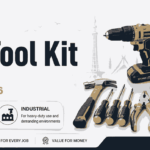
Hardware tools are the backbone of construction, electrical, repair, and maintenance work. And according to the reports, Asia Pacific is expected to record the highest CAGR driven by the rapid industrialization, infrastructure development, and rising demand for professional and household tool storage solutions.
However, in Pakistan, demand for quality hardware tools is increasing because construction projects, workshops, factories, electrical services, home repairs, and maintenance work are all becoming more tool-dependent. Buyers are no longer looking only for cheap tools. Many professionals now prefer tools that last longer, feel comfortable in the hand, improve accuracy, and reduce the risk of workplace accidents.
This trend also connects with the wider power tools market. Pakistan’s power tools market is projected to grow at a CAGR of 8.2 percent from 2026 to 2032, supported by the use of advanced tools in construction sites, workshops, and maintenance services. Globally, the power tools market is also growing, with The Business Research Company estimating it at USD 46.81 billion in 2026.
A good hardware tool kit is useful for electricians, plumbers, carpenters, mechanics, construction workers, maintenance teams, and even home users. However, the tools needed for a home repair kit are different from tools required at a construction site or industrial workshop. This guide explains the top 15 tools used in 2026 and helps buyers understand which tools matter most.
Why Hardware Tools Are Essential for Professionals
A professional worker is only as efficient as the tools available on site. Good tools do not just make work easier; they improve finishing, reduce mistakes, save time, and support safer working conditions.
Improved Efficiency
A proper tool helps complete work faster. For example, a correct screwdriver prevents screw damage, a good drill machine saves manual effort, and a quality measuring tape improves accuracy. In construction and maintenance work, small time savings on every task can make a big difference by the end of the day.
Professional workers cannot afford to waste time searching for missing tools or using the wrong tool for the job. This is why a complete hardware tool kit matters.
Workplace Safety
Workplace safety depends heavily on tool quality. A loose hammer head, weak plier grip, damaged wire stripper, or poor-quality voltage tester can create serious risk. In electrical work, using the wrong tool can cause shock or equipment damage. In construction, weak tools can break under pressure and injure workers.
Good tools help reduce these risks because they are designed for proper grip, strength, insulation, and stable performance.
Long-Term Cost Savings
Cheap tools may look attractive at first, but they often wear out quickly. A low-quality wrench can damage nuts and bolts. A poor screwdriver can ruin screw heads. A weak drill can stop working under regular use.
Investing in better tools may cost more in the beginning, but it can reduce replacement costs, improve work quality, and save money over time.
Top 15 Hardware Tools Used in 2026
The tools below are commonly used across construction, electrical, workshop, and maintenance jobs. Some are basic hand tools, while others are power tools that make professional work faster and more accurate.
1. Claw Hammer
A claw hammer is one of the most common tools in construction and repair work. It is used for driving nails, removing nails, adjusting wooden parts, and light demolition work.
For home use, a medium-weight hammer is usually enough. For construction and carpentry, choose a hammer with a strong handle, balanced weight, and durable head. A poor-quality hammer can slip or break, which can be dangerous during work.
2. Adjustable Wrench
An adjustable wrench is used for tightening and loosening nuts and bolts of different sizes. It is useful for plumbing, machinery repair, furniture fitting, and general maintenance.
When buying an adjustable wrench, check the jaw grip and adjustment movement. The wrench should not become loose during use because that can damage the nut or hurt the user’s hand.
3. Combination Pliers
Combination pliers are used for gripping, bending, twisting, and light cutting. They are commonly used by electricians, mechanics, maintenance workers, and home users.
A good plier should have strong jaws and a comfortable grip. For electrical work, insulated handles are important because they offer extra protection when working near live or sensitive wiring.
4. Screwdriver Set
A screwdriver set is a must-have in every hardware tool kit. It is used for opening and tightening screws in switchboards, furniture, appliances, machines, panels, and fittings.
A complete set should include flathead and Phillips screwdrivers in different sizes. For electricians and technicians, magnetic tips and insulated handles can make work safer and easier.
5. Measuring Tape
A measuring tape is used in construction, carpentry, installation, fitting, and maintenance work. Without accurate measurement, even simple jobs can go wrong.
A good measuring tape should have clear markings, a strong lock, and a durable body. For professional use, a longer tape with stronger blade material is better.
6. Utility Knife
A utility knife is used for cutting cardboard, plastic, insulation, rope, packaging, rubber, and light materials. It is a simple tool, but it is used very often in workshops and maintenance work.
Choose a utility knife with a comfortable grip and secure blade lock. A loose blade can be unsafe during cutting.
7. Spirit Level
A spirit level helps check whether a surface is straight or balanced. It is used while installing shelves, doors, frames, tiles, cabinets, pipes, and electrical fittings.
For construction and carpentry, this tool is important because visual judgement is not always accurate. A small imbalance can affect the finishing of the entire job.
8. Wire Stripper
A wire stripper is used to remove insulation from electrical wires without damaging the conductor inside. It is one of the most important electrical tools for electricians.
Using a knife to strip wires can damage the copper conductor and create weak connections. A wire stripper gives cleaner and safer results.
9. Voltage Tester
A voltage tester helps check whether an electrical point has current. It is commonly used before repairing switches, sockets, panels, and wiring.
For electricians and maintenance workers, this tool is essential for safety. However, major electrical work should still be handled with proper training and safety precautions.
10. Electric Drill Machine
An electric drill machine is used for drilling holes in walls, wood, metal, plastic, and other materials. It is one of the most useful power tools for construction, furniture fitting, installation, and repair work.
For occasional home use, a basic drill may be enough. For workshops and construction sites, a stronger drill with hammer function is usually more practical.
You can browse related options in the Power Tools Category on Alahdeen.
11. Angle Grinder
An angle grinder is used for cutting, grinding, polishing, and finishing metal, tiles, concrete, and masonry. It is common in construction, fabrication, workshop, and maintenance work.
This tool should always be used carefully with safety glasses, gloves, and the correct disc. A wrong disc or careless use can be dangerous.
12. Impact Driver
An impact driver is used for driving screws and fasteners quickly. It is more powerful than a normal screwdriver and is useful in carpentry, construction, metal work, and installation jobs.
Professionals use impact drivers because they save time and reduce hand effort, especially when working with long screws or hard materials.
13. Circular Saw
A circular saw is used for cutting wood, boards, panels, and selected construction materials. Carpenters, furniture makers, and construction workers commonly use it for faster and straighter cuts.
Before buying, check blade size, motor power, cutting depth, and safety guard quality. Like all cutting tools, it must be handled carefully.
You can explore more drilling, cutting, grinding, and fastening tools in the Power Tools Category.
14. Socket Set
A socket set is used for tightening and loosening nuts and bolts. It is very useful for mechanics, machine maintenance, vehicle repair, and assembly work.
A good socket set saves time because it allows users to work faster in tight spaces. For workshops, it is one of the most important maintenance tools.
15. Tool Box
A hardware tool box keeps tools organized, protected, and easy to carry. Without proper storage, tools get lost, damaged, or mixed with other items.
For home use, a small plastic tool box may be enough. For workshops and industrial use, metal tool boxes, heavy-duty cases, or tool trolleys are better.
Hardware Tools Quick Selection Table and Buying Pointers
Choosing tools becomes easier when buyers match the tool with the actual work. A construction worker, electrician, carpenter, mechanic, and maintenance technician may use some of the same tools, but their priorities are different.
| Tool | Best Used For | Buyer Tip |
| Claw Hammer | Carpentry, construction, repair | Choose balanced weight and strong handle |
| Adjustable Wrench | Plumbing, bolts, general repairs | Check jaw grip and smooth adjustment |
| Combination Pliers | Electrical and repair work | Prefer insulated handles for electrical use |
| Screwdriver Set | Furniture, appliances, switches | Buy multiple sizes with strong tips |
| Measuring Tape | Construction and fitting work | Choose clear markings and strong lock |
| Utility Knife | Cutting packaging and light materials | Use a secure blade lock |
| Spirit Level | Alignment and installation | Choose durable body for site use |
| Wire Stripper | Electrical wiring | Avoid damaging copper conductors |
| Voltage Tester | Electrical safety checks | Use before touching wiring points |
| Electric Drill | Drilling and installation | Match power with material type |
| Angle Grinder | Cutting and grinding | Always use correct disc and safety gear |
| Impact Driver | Fastening and assembly | Useful for repetitive screw work |
| Circular Saw | Wood and panel cutting | Check blade quality and safety guard |
| Socket Set | Mechanical and machine work | Choose durable sockets and ratchet |
| Tool Box | Tool storage | Select size according to tool quantity |
Keep these practical points in mind before buying:
- Do not buy a tool only because it is cheap.
- Choose tools according to your actual work, not only by the number of pieces in the kit.
- For electrical work, prefer insulated tools where needed.
- For construction work, focus on strength, grip, and durability.
- For maintenance work, choose tools that are easy to carry and organize.
- Always check handle comfort because professionals use tools for long hours.
- Buy a tool box with enough space for future tools.
- For power tools, check motor power, warranty, spare parts, and brand support.
- Keep safety gear with your tool kit, especially for cutting, drilling, and electrical work.
- Compare suppliers before buying in bulk for workshops or businesses.
Hardware Tools Used in Construction Work
Construction work needs tools that can handle rough use, heavy materials, and daily site conditions. These tools help workers measure, cut, fix, drill, align, and assemble different materials.
Most Common Construction Tools
Common construction tools include hammers, measuring tapes, spirit levels, screwdrivers, drills, grinders, circular saws, utility knives, pliers, and wrenches. For larger projects, power tools and heavy-duty equipment become even more important.
Construction workers need tools that are strong, easy to grip, and safe to use on site.
Safety Equipment Requirements
Construction tools should always be used with safety equipment. Gloves, safety glasses, helmets, ear protection, masks, and safety shoes may be required depending on the work.
For cutting and grinding, eye protection is necessary. For drilling and electrical work, proper handling and safety checks are important.
Productivity Benefits
The right construction tools improve speed and accuracy. A drill machine can complete work faster than manual drilling. A spirit level improves installation accuracy. A good measuring tape prevents cutting mistakes.
Better tools reduce rework and help workers complete tasks properly the first time.
Hardware Tools Used by Electricians
Electricians need tools that support safety, accuracy, and clean wiring. Electrical work is risky, so tool quality is very important.
Electrical Testing Tools
Voltage testers, multimeters, and continuity testers help electricians check live points, voltage, and faults. These tools are used before starting repairs or during troubleshooting.
A voltage tester is one of the most basic safety tools for electrical work.
Wire Handling Tools
Wire strippers, wire cutters, pliers, crimping tools, screwdrivers, and cable cutters are commonly used by electricians. These tools help cut, strip, connect, bend, and manage wires properly.
Using the right wire tool prevents damage to conductors and improves connection quality.
Electrical Safety Essentials
Electricians should use insulated tools, gloves, testers, and proper safety procedures. A normal hand tool may not be suitable for electrical work if it lacks insulation.
Electrical tools should be checked regularly for cracks, damage, and worn handles.
Hardware Tools Used in Maintenance Work
Maintenance work can include small repairs, machine checks, electrical troubleshooting, plumbing adjustments, furniture repair, and routine inspections. Maintenance teams need versatile tools because every day can bring a different task.
Preventive Maintenance Tools
Preventive maintenance tools include screwdrivers, wrenches, socket sets, pliers, testers, measuring tape, lubricating tools, and inspection lights. These tools help workers check problems before they become serious.
Repair and Troubleshooting Equipment
For troubleshooting, workers may need voltage testers, multimeters, socket sets, adjustable wrenches, screwdrivers, wire cutters, and drill machines. These tools help identify and fix faults quickly.
Inspection Tools
Inspection tools include measuring tapes, spirit levels, testers, flashlights, and sometimes thermal or digital measuring devices. These tools help identify alignment issues, electrical problems, loose fittings, and wear.
Best Hardware Tools Brands for Professional Use
Brand selection matters when tools are used regularly. A home user may manage with a basic kit, but professional workers usually need stronger brands with better material and long-term reliability.
Bosch
Bosch is known for reliable power tools and professional-grade equipment. It is commonly used in construction, workshops, maintenance, and industrial work.
Stanley
Stanley is popular for hand tools, measuring tools, tool boxes, and professional tool kits. It is widely used by technicians, electricians, carpenters, and home users.
Ingco
Ingco is popular in Pakistan because it offers a wide tool range at accessible prices. It is commonly used by workshops, home users, and small businesses.
Total Tools
Total Tools offers hand tools, power tools, accessories, and workshop equipment. It is known for value-focused products.
DeWalt
DeWalt is preferred for heavy-duty work, especially by contractors, carpenters, and industrial users who need durable power tools.
Makita
Makita is known for professional power tools used in construction, carpentry, fabrication, and industrial maintenance.
How to Build a Complete Hardware Tool Kit
A complete tool kit should be built according to your work type. Do not buy tools randomly. Start with the basics, then add specialized tools as your work grows.
Must-Have Hand Tools
Every basic kit should include screwdrivers, pliers, hammer, adjustable wrench, measuring tape, utility knife, Allen keys, socket set, wire cutter, and voltage tester.
These tools cover most daily repair, fitting, and maintenance tasks.
Essential Power Tools
For professional use, add an electric drill, angle grinder, impact driver, circular saw, and heat gun where needed. These tools save time and improve productivity.
Power tools should be selected carefully because they cost more and need proper handling.
Choosing the Right Hardware Tool Box
Choose a hardware tool box according to tool quantity and usage. A small plastic box is enough for home use. A metal box or trolley is better for workshops and industries.
A good tool box should be strong, easy to carry, organized, and spacious enough for future tools.
Tips for Maintaining Hardware Tools
Tools last longer when they are cleaned, stored, and inspected properly. Poor maintenance can make even expensive tools fail early.
Cleaning Procedures
Clean tools after use, especially if they are exposed to dust, grease, cement, oil, or metal particles. Wipe them with a dry cloth and remove dirt from moving parts.
Proper Storage
Keep tools inside a tool box, cabinet, or trolley. Do not leave them scattered on floors or exposed to rain and dust.
Rust Prevention
Metal tools can rust if exposed to moisture. Keep them dry and apply light oil where needed, especially on tools used in workshops or outdoor sites.
Regular Inspection
Check tools for cracked handles, loose heads, worn tips, damaged wires, rust, and weak grips. Replace damaged tools before they become unsafe.
Where Businesses Buy Hardware Tools in Pakistan
Businesses buy hardware tools from wholesale markets, industrial suppliers, brand dealers, and online B2B platforms. The right source depends on quantity, budget, product type, and required quality.
Wholesale Markets
Wholesale markets are useful for comparing prices and buying common tools in bulk. Retailers, workshops, and contractors often visit these markets for regular stock.
Industrial Suppliers
Industrial suppliers provide heavy-duty tools, branded tools, safety equipment, power tools, and specialized maintenance products. They are suitable for factories, warehouses, and large projects.
Online B2B Platforms
Online B2B platforms make supplier discovery easier because buyers can compare categories and contact suppliers without visiting multiple markets.
Businesses can explore broader product options through the Electronics & Electrical Category and source related tools through the Power Tools Category on Alahdeen.
Conclusion
Hardware tools are essential for construction, electrical, and maintenance work because they improve speed, safety, accuracy, and work quality. From simple hand tools like hammers, pliers, screwdrivers, and measuring tapes to power tools like drills, grinders, impact drivers, and circular saws, every tool has a clear role.
A good hardware tool kit should be built according to actual work needs. Home users need basic tools, electricians need insulated and testing tools, construction workers need strong and durable tools, and maintenance teams need versatile tools for quick troubleshooting.
The right hardware tool box also matters because organized tools save time and reduce damage. When buying tools, compare quality, brand reputation, warranty, safety features, and supplier reliability.
Investing in reliable hardware tools is not just about buying equipment. It is about improving work performance, reducing mistakes, and keeping every job safer and more professional.