Are you planning to buy a lithium battery in Pakistan but wondering how many years it will actually last in real home, shop, or solar system use?
This is one of the most important questions for anyone investing in solar backup. A lithium battery is not a small purchase, so buyers naturally want to know whether the higher price is worth it compared with tubular or lead-acid batteries. In Pakistan, where load shedding, high electricity bills, hot weather, and frequent backup needs are common, battery life depends on much more than the number written on the box.
A good lithium battery can usually last 8 to 12 years or more in Pakistan if it is properly sized, installed in a cool and ventilated place, charged with the right inverter settings, and not overloaded. However, the actual life can change from user to user. A battery used lightly for fans, lights, router, and TV may last longer than a battery used daily for heavy loads. Similarly, a battery connected to a compatible hybrid inverter with correct charging settings will perform better than one installed with poor configuration.
Lithium Battery life also depends on battery chemistry, brand quality, cell grade, BMS protection, temperature control, depth of discharge, daily cycling, and after-sales support. This is why buyers should not choose a lithium battery only by price. The better approach is to check usable capacity, warranty, inverter compatibility, installation quality, and supplier reliability before buying.
Why Lithium Battery Life Matters in Pakistan
Lithium battery life matters because battery replacement is one of the biggest costs in a solar backup system. Many buyers in Pakistan install solar panels and hybrid inverters because they want lower electricity bills and backup during load shedding. But if the battery fails early, the whole system becomes expensive and frustrating.
Pakistan’s solar market has grown very fast. REN21 reported that Pakistan imported nearly 45 GW of solar panels over the past four to five years, including 17 GW in 2024 alone, almost double the volume imported in 2023.
As solar adoption increases, batteries are becoming more important. A solar system without batteries may reduce bills during the day, but a solar system with batteries can support backup at night or during power cuts. That is why many homeowners, shops, clinics, offices, schools, and small businesses now ask about lithium battery backup.
The real question is not only “What is the lithium battery price in Pakistan?” The better question is “How long will this battery last, and will it give value for the money?”
Average Lithium Battery Life in Pakistan
In normal use, a good lithium battery can last around 8 to 12 years in Pakistan. Some premium LiFePO4 batteries may last longer if they are used carefully and installed correctly. However, a low-quality lithium battery may fail much earlier if the cells, BMS, wiring, or inverter settings are poor.
Battery life is usually measured in two ways: years of use and charge cycles. A cycle means one complete charge and discharge. If a battery is charged and discharged once daily, it completes around 365 cycles in one year. If a lithium battery supports thousands of cycles, it can last many years in normal solar use.
Stay informed with the Alahdeen Blog: https://alahdeen.com/blogs/blogs-list/
LiFePO4 battery chemistry is often preferred for solar storage because it offers long cycle life and better thermal stability. Some technical references describe LiFePO4 batteries as supporting thousands of cycles depending on depth of discharge and operating conditions. For example, Popular Mechanics reported that LiFePO4 power stations can reach 3,000 charge cycles or more, compared with around 500 cycles for older lithium-ion power stations.
This does not mean every lithium battery in Pakistan will automatically last 10 years. The battery must be genuine, properly sized, and used correctly.
What Is a Lithium Battery?
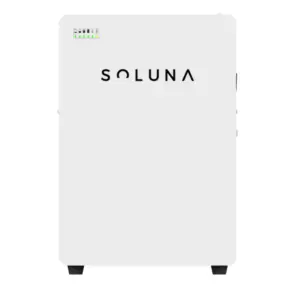
A lithium battery is a rechargeable battery that stores electricity through lithium-based chemistry. In solar systems, the most common and preferred type is usually LiFePO4, also called lithium iron phosphate.
LiFePO4 batteries are popular for solar because they are safer, longer-lasting, and more stable than many older battery technologies. They also allow deeper usable capacity compared with lead-acid or tubular batteries.
For example, a tubular battery should usually not be deeply discharged every day because it can reduce life. A lithium battery can generally provide more usable energy from its rated capacity, depending on model and settings.
Why Lithium Batteries Are Becoming Popular in Pakistan
Lithium batteries are becoming popular in Pakistan because people want reliable backup without constant maintenance. Traditional tubular and lead-acid batteries require water checking, ventilation, terminal cleaning, and careful discharge control. Lithium batteries are more convenient because they are usually sealed, compact, and low-maintenance.
Another reason is daily load shedding and high electricity bills. Many users want to store solar energy during the day and use it later. Lithium batteries charge faster and can handle daily cycling better than many conventional batteries.
IEEFA reported that Pakistan’s battery energy storage imports are growing quickly, with 1.25 GWh of lithium-ion battery packs imported in 2024 and 400 MWh imported in the first two months of 2025. It also projected that imports could reach 8.75 GWh by 2030 if the trend continues.
This growth shows that lithium batteries are no longer only for premium users. They are becoming part of Pakistan’s solar and backup power market.
Main Factors That Affect Lithium Battery Life
Lithium battery life depends on how the battery is used every day. A good battery can still perform poorly if it is installed or used incorrectly.
Temperature
Heat is one of the biggest factors in Pakistan. Cities like Karachi, Lahore, Multan, Hyderabad, Sukkur, Faisalabad, and many rural areas can face high summer temperatures. If the battery is installed in a closed, hot, or poorly ventilated place, its life can reduce.
Lithium batteries should be installed in a shaded, dry, and ventilated area. Avoid placing them near direct sunlight, hot walls, kitchens, generators, or closed metal boxes.
Depth of Discharge
Depth of discharge means how much of the battery is used before charging again. A battery that is drained deeply every day will age faster than a battery that is used moderately.
Lithium batteries can usually handle deeper discharge than tubular batteries, but that does not mean they should be abused. Keeping some reserve capacity can help improve long-term life.
Charging Settings
Charging settings must match the battery. A lithium battery needs correct voltage, current, cut-off settings, and sometimes communication with the inverter through BMS support.
If the inverter is not configured correctly, the battery may overcharge, undercharge, disconnect unexpectedly, or lose performance. This is why buyers should use a compatible hybrid inverter and a trained installer.
Load Size
If the battery is too small for the load, it will drain quickly and cycle heavily. For example, a battery designed for fans and lights should not be expected to run air conditioners for long hours.
Heavy loads such as ACs, water motors, irons, microwave ovens, and pumps require proper battery sizing. Under-sizing is one of the most common reasons buyers feel disappointed.
Battery Quality
Not all lithium batteries are equal. Cell quality, BMS quality, internal wiring, brand reputation, warranty, and after-sales support all matter. A low-price battery with weak cells may not last as expected.
Buyers should check brand, warranty, usable capacity, cycle life claim, BMS protection, and supplier reputation before buying.
Lithium Battery vs Tubular Battery Life
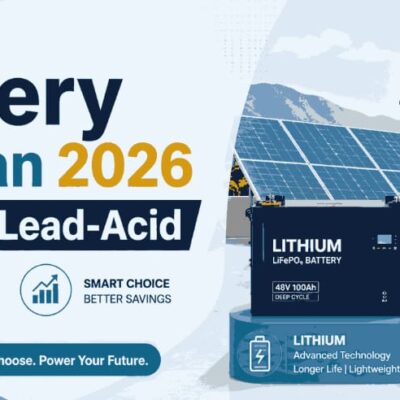
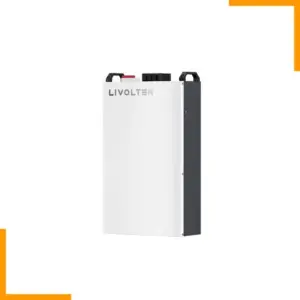
Lithium batteries usually last longer than tubular batteries when used in daily solar backup systems. Tubular batteries are cheaper upfront, but they need more maintenance and may degrade faster if discharged deeply every day.
A tubular battery may be suitable for basic backup, limited usage, and budget buyers. But for daily solar cycling, lithium batteries usually offer better long-term value because they charge faster, provide deeper usable capacity, and require less maintenance.
For example, a household using battery backup every night may benefit more from lithium because the battery is charged and discharged regularly. A shop that needs stable backup for lights, fans, router, CCTV, and POS system may also prefer lithium because downtime can affect business.
However, if the budget is limited and the backup need is small, tubular batteries can still work. The right choice depends on budget, usage, and expected backup time.
How Many Hours Can a Lithium Battery Provide Backup?
Backup time depends on battery capacity and load. A lithium battery with higher usable kWh capacity will support appliances for longer. For example, a battery running only fans, lights, and a router will last much longer than a battery running an air conditioner.
To estimate backup, buyers should calculate the total load in watts and compare it with the usable battery capacity. For example, if your usable battery capacity is 5kWh and your load is 500 watts, the backup may be around 8 to 9 hours after inverter losses. If the load is 1,500 watts, backup may reduce to around 3 hours.
These are simple estimates. Actual backup depends on inverter efficiency, battery health, temperature, and appliance behavior.
Can a Lithium Battery Run an AC?
Yes, a lithium battery can run an AC if the system is designed properly. But AC backup requires a larger battery bank, suitable inverter, and correct wiring. Air conditioners consume much more electricity than fans and lights.
A 1-ton or 1.5-ton inverter AC may be possible on a lithium battery setup, but the backup time will depend on AC efficiency, room temperature, thermostat setting, battery size, and inverter capacity.
Many buyers make the mistake of expecting a small lithium battery to run an AC all night. That is not realistic. If AC backup is required, the installer should calculate load and battery size carefully.
For AC-heavy use, the buyer may need a bigger lithium battery bank, higher-capacity hybrid inverter, and enough solar panels to recharge the battery during the day.
Best Lithium Battery Use Cases in Pakistan
Lithium batteries are useful for many Pakistani buyers.
For homes, they are good for backup of fans, lights, routers, TV, refrigerator, and selected appliances. For offices, they can support computers, internet devices, lights, CCTV, and small equipment. For shops, they can support POS machines, CCTV, lights, fans, and refrigerators depending on load.
For clinics and schools, lithium batteries provide reliable backup where power continuity matters. For farms and rural areas, lithium batteries can support off-grid systems where grid electricity is weak or unavailable. Lithium batteries are also suitable for hybrid solar systems where the user wants to store solar energy and use it during evening or night hours.
How to Extend Lithium Battery Life in Pakistan
Lithium batteries can last longer if used properly. The first step is proper installation. Keep the battery in a cool, dry, and ventilated place. Avoid direct sunlight and excessive heat.
- The second step is correct inverter settings. Always ask the installer to configure charging voltage, discharge limits, current settings, and BMS communication where supported.
- The third step is load management. Do not overload the battery. Avoid running heavy appliances unless the system is designed for them.
- The fourth step is regular monitoring. Many lithium batteries have display screens or app-based monitoring. Check battery status, temperature, state of charge, and error alerts.
- The fifth step is buying from a reliable supplier. A good supplier can guide you on warranty, compatibility, and after-sales support.
Signs Your Lithium Battery Is Getting Weak
A lithium battery may be getting weak if backup time becomes much shorter than before, the battery disconnects under load, the inverter shows frequent battery errors, the battery takes unusual time to charge, or the system shuts down unexpectedly.
Sometimes the issue is not the battery itself. It may be inverter settings, loose wiring, poor communication, excessive load, or a faulty breaker. Before replacing the battery, ask a professional to inspect the complete system.
Lithium Battery Buying Checklist
Before buying a Lithium Battery Price in Pakistan, check these points:
- Battery chemistry, preferably LiFePO4 for solar use
- Usable kWh capacity
- Voltage compatibility with inverter
- BMS protection
- Cycle life claim
- Warranty period
- Brand reputation
- Supplier credibility
- After-sales support
- Installation quality
- Heat protection
- Inverter compatibility
- Backup load calculation
This checklist helps buyers avoid wrong purchases and unrealistic expectations.
How Alahdeen Helps Solar Battery Buyers
Buying lithium batteries can be confusing because buyers need to compare voltage, capacity, inverter compatibility, warranty, and supplier support. Alahdeen helps buyers explore solar and electrical product categories in one place.
This is useful for homeowners, installers, retailers, contractors, and bulk buyers who want to compare supplier options before purchasing. Buyers can explore solar batteries, inverters, panels, cables, and related accessories through Alahdeen’s Solar & Renewable Energy Products Category.
For related electrical products such as breakers, wiring, DB boxes, and accessories, buyers can also visit Electronics & Electrical.
FAQ’s
How long does a lithium battery last in Pakistan?
A good lithium battery can last around 8 to 12 years or more in Pakistan if it is properly installed, protected from heat, used with correct inverter settings, and not overloaded.
Is lithium battery better than tubular battery?
Yes, lithium batteries usually offer longer life, faster charging, deeper usable capacity, and lower maintenance. Tubular batteries are cheaper upfront but require more care.
What reduces lithium battery life?
Heat, overloading, wrong charging settings, poor installation, deep daily discharge, low-quality cells, and incompatible inverters can reduce lithium battery life.
Can lithium batteries run an AC?
Yes, lithium batteries can run an AC if the battery bank, inverter, and solar system are designed for AC load. A small lithium battery will not run an AC for long hours.
Which lithium battery is best for solar in Pakistan?
LiFePO4 lithium batteries are commonly preferred for solar because they offer long cycle life, safety, and better stability compared with many other battery options.
Do lithium batteries need maintenance?
Lithium batteries need less maintenance than tubular or lead-acid batteries. However, they still need proper installation, correct settings, temperature control, and occasional monitoring.
Are lithium batteries worth the price in Pakistan?
For daily solar backup and long-term use, lithium batteries can be worth the higher upfront price because they last longer and provide better usable capacity.
Where can I buy lithium solar batteries in Pakistan?
Buyers can explore solar batteries, inverters, panels, and related products through Alahdeen’s Solar & Renewable Energy Products Category.
Conclusion
A lithium battery in Pakistan can last around 8 to 12 years or more if it is high quality, correctly installed, protected from heat, and used with a compatible inverter. The real life depends on daily usage, depth of discharge, charging settings, load size, and battery quality.
Lithium batteries are becoming popular because they offer longer life, faster charging, deeper usable capacity, and lower maintenance than traditional tubular and lead-acid batteries. They are especially useful for homes, shops, offices, clinics, and small businesses that need daily backup or solar energy storage. The best result comes from proper sizing, good installation, and buying from reliable suppliers.
Power Your Future with Premium Lithium Batteries
Get genuine lithium batteries at competitive wholesale prices. Reliable performance, longer life, and a free quote today.