
Are you planning to buy a power bank in Pakistan but confused about how much you should actually pay in 2026?
The Power Bank Price in Pakistan generally starts from around Rs. 1,000 to Rs. 3,000 for basic models, while branded 10,000mAh and 20,000mAh power banks commonly cost between Rs. 4,000 and Rs. 10,000. Premium magnetic, wireless and high-wattage models can cost Rs. 11,000 to Rs. 18,000 or more, depending on the brand, capacity, charging speed and safety features.
For example, current online listings show basic 10,000mAh power banks on Alahdeen from around Rs. 1,140 to Rs. 3,900, while a Baseus 10,000mAh 20W model is listed around Rs. 6,450. At the premium end, an Anker MagGo 10,000mAh magnetic power bank is listed at approximately Rs. 17,800. These examples show why two power banks with the same advertised capacity can have very different prices.
The right power bank is not necessarily the cheapest or the one with the largest capacity printed on its packaging. Buyers should also check its actual rated capacity, charging wattage, port types, battery-cell quality, built-in protection, warranty and brand reputation.
Why Power Banks Are in Demand in Pakistan
Power banks have become an everyday mobile accessory for students, office employees, travellers, delivery riders, sales teams, content creators and business owners. Many people depend on their phones for WhatsApp, online banking, navigation, calls, social media and work communication, so a drained battery can interrupt much more than entertainment.
Pakistan also has a large and active mobile-device market. According to the Pakistan Telecommunication Authority, locally assembled mobile-device volumes reached more than 31 million units during 2025, while local assembly of 5G handsets continued during 2026. The growing use of smartphones and connected devices naturally increases demand for charging cables, adapters and portable backup solutions.
The global power bank market is also expanding. Fortune Business Insights valued the market at approximately USD 15.57 billion in 2025 and estimated that it would grow to USD 16.46 billion in 2026. Asia-Pacific accounted for a major share of that market, supported by high smartphone usage and demand for portable charging products.
For Pakistani consumers, power banks are particularly useful during travel, university hours, fieldwork, long office days and electricity interruptions. A good power bank allows users to recharge a phone without searching for a wall socket or carrying a charger everywhere.
Average Power Bank Price in Pakistan in 2026
Power bank prices vary significantly because the term “power bank” covers everything from small budget products to advanced fast-charging battery packs capable of charging smartphones, tablets and even some laptops.
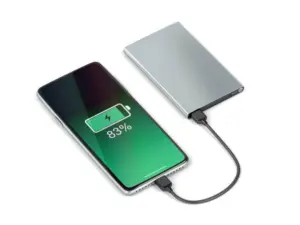
Based on current product listings available in July 2026, buyers may find the following general price ranges:
| Power bank category | Typical capacity | Estimated price range in Pakistan |
| Basic local or generic power bank | 5,000mAh–10,000mAh | Rs. 1,000–Rs. 3,000 |
| Standard branded power bank | 10,000mAh | Rs. 3,500–Rs. 7,000 |
| Branded high-capacity power bank | 20,000mAh | Rs. 4,500–Rs. 9,000 |
| Fast-charging power bank | 10,000mAh–20,000mAh | Rs. 5,000–Rs. 12,000 |
| Magnetic or wireless power bank | Around 10,000mAh | Rs. 8,000–Rs. 18,000+ |
| High-wattage travel or laptop power bank | 20,000mAh–30,000mAh | Rs. 9,000–Rs. 20,000+ |
These are estimated market ranges rather than fixed retail prices. Product discounts, wholesale quantities, import costs, exchange-rate changes, brand warranty and seller margins can affect the final amount.
For a practical comparison, Xiaomi’s official Pakistan store currently lists its 10,000mAh 22.5W Lite Power Bank at approximately Rs. 4,099, its Redmi 20,000mAh model at around Rs. 5,349 and its 20,000mAh 33W integrated-cable model at about Rs. 7,899. Its magnetic 10,000mAh model is listed near Rs. 10,999.
Audionic listings also show how promotional pricing can influence the market. Its 20,000mAh Spark Pro S-230 has been listed at around Rs. 4,999, while a 30,000mAh 65W Reboot model has appeared near Rs. 9,900 during a promotional period.
How Much Does a 10,000mAh Power Bank Cost?
A 10,000mAh power bank is often the most practical option for everyday users because it provides a balance between portability, weight and battery backup.
In 2026, the price of a 10,000mAh power bank in Pakistan can start from roughly Rs. 1,000 for entry-level wholesale or generic models. Mid-range fast-charging options generally cost between Rs. 3,000 and Rs. 7,000, while premium wireless and magnetic models can cost well above Rs. 10,000.
Current Alahdeen listings include a J-Cell 10,000mAh model with built-in cables at approximately Rs. 1,140, an H5 22.5W mini power bank at around Rs. 3,000 and a Mcdodo 10,000mAh model at about Rs. 3,900.
A premium model costs more because it may offer faster charging, stronger internal cells, better temperature control, USB-C Power Delivery, digital indicators, magnetic charging or a recognised brand warranty.
A 10,000mAh power bank does not always deliver the entire printed capacity to the phone. Energy is lost during voltage conversion and through heat. Audionic estimates that a typical 10,000mAh unit may provide around 1.5 to 2 full smartphone charges, depending on the phone’s battery size and charging efficiency.
How Much Does a 20,000mAh Power Bank Cost?
A 20,000mAh power bank is better suited to people who travel frequently, charge more than one device or remain away from a power socket for longer periods.
The 20,000mAh power bank price in Pakistan generally falls between Rs. 3,000 and Rs. 9,000 for commonly available models. Premium products with 33W, 45W or 65W output, integrated cables, or advanced fast-charging support may cost more.
For example, a Ven-Dens 20,000mAh power bank is currently listed on Alahdeen at approximately Rs. 3,800, while a 66W generic fast-charging model with built-in cables and a digital display has been listed at around Rs. 2,700. Prices at this level may be wholesale or promotional, so buyers should carefully check the seller, warranty and rated output.
By comparison, the Xiaomi 20,000mAh 33W power bank is listed around Rs. 7,899, while its Redmi 20,000mAh model costs approximately Rs. 5,349.
A higher-capacity power bank is usually heavier and larger. A 20,000mAh model can be useful for travelling or charging several devices, but it may feel bulky for someone who only needs an emergency top-up during the day.
Why Do Power Bank Prices Vary So Much?
Two power banks may both carry a 10,000mAh label but perform very differently. Capacity is only one part of the product.
The internal battery cells have a major effect on price and performance. Better-quality lithium-ion or lithium-polymer cells generally provide more consistent output, longer service life and improved safety. Very cheap units may use lower-grade cells or provide less usable capacity than advertised.
Charging speed also matters. A basic power bank may support ordinary 10W charging, while more expensive models may offer 18W, 20W, 22.5W, 33W or 65W charging. Higher-wattage models can recharge compatible phones more quickly and may also support tablets or laptops.
Stay informed with the Alahdeen Blog: https://alahdeen.com/blogs/blogs-list
The number and type of ports also influence price. Some products offer only USB-A output, while others include USB-C input and output, Power Delivery, Quick Charge support, built-in cables or multiple charging ports.
Wireless and magnetic charging also add to the price. These products use extra charging components and may include alignment magnets, stands or digital displays. For example, the Anker MagGo 10,000mAh model is listed at around Rs. 17,800, which is far above the price of a basic wired 10,000mAh power bank.
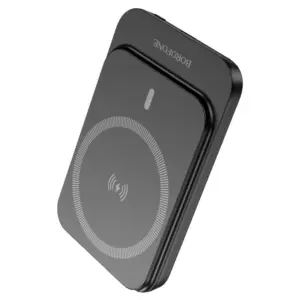
Brand name, warranty and after-sales service also matter. A recognised brand may cost more upfront, but buyers may receive better product testing, safety certification and customer support.
What Capacity Power Bank Should You Buy?
The best capacity depends on how you use your phone.
A 5,000mAh model can work as a compact emergency charger. It is small enough to carry in a pocket, but it may provide only a partial or single phone charge depending on the device. A 10,000mAh power bank is suitable for most students, office workers and everyday users. It offers useful backup without becoming excessively heavy.
A 20,000mAh model is better for travellers, delivery riders, field staff and people who carry multiple devices. It is also useful during long journeys or extended power outages.
A 30,000mAh power bank provides more backup but is considerably heavier. It may be practical for group travel, outdoor work or charging several devices, but it is less convenient for daily pocket use. Audionic also notes that high-capacity units tend to be larger and heavier, while 10,000mAh models are generally easier to carry.
Does Fast Charging Increase the Power Bank Price?
Yes, fast charging usually increases the price because the power bank requires a stronger charging controller, better heat management and compatible input and output components.
However, buyers should not assume that a high wattage number guarantees fast charging for every phone. The smartphone and power bank must support the same charging standard. A 22.5W power bank may charge one Android phone quickly but charge another device at a lower rate if their protocols are different.
USB-C Power Delivery is especially useful for newer smartphones, tablets and some laptops. Buyers using iPhones, Samsung Galaxy phones, Google Pixel devices or USB-C laptops should check whether the product supports Power Delivery at the required wattage.
It is also important to check how quickly the power bank itself can be recharged. A high-capacity model with slow input may take many hours to fill. USB-C fast input can reduce waiting time, particularly for 20,000mAh and 30,000mAh units.
Is a Cheap Power Bank Safe to Use?
A low price does not automatically mean the product is unsafe, but buyers should be more careful when purchasing extremely cheap models from unknown suppliers.
A good power bank should protect overcharging, overheating, excessive current, short circuits and deep discharge. These safety controls are important because power banks contain rechargeable battery cells that can generate heat during charging and use.
Consumers should avoid products with swollen bodies, damaged ports, unusual heat, strange smells or loose internal parts. A damaged power bank should not be continued in use.
Buyers should also avoid leaving a power bank in direct sunlight, on a vehicle dashboard or near high-temperature equipment. Heat can reduce battery life and increase safety risks. For business buyers, requesting product specifications, samples and warranty information before ordering in bulk is a practical step. Retailers should not rely only on the capacity printed on the packaging.
How to Check the Real Value of a Power Bank
Before buying, compare the price with the product’s usable features.
First, check the battery capacity. Capacity is usually shown in milliampere-hours, such as 10,000mAh or 20,000mAh. However, also look for rated capacity, because this provides a more realistic idea of how much energy may reach the connected device.
For example, Xiaomi lists its Redmi 20,000mAh power bank with a rated output capacity of 12,000mAh at 5.1V. The difference is caused by voltage conversion and normal energy loss.( Next, check charging wattage and port compatibility. A product with USB-C Power Delivery may offer better long-term value than an older model with only Micro-USB input.
Check the weight and size as well. A very lightweight product claiming extremely high capacity may deserve closer inspection. High-capacity battery cells normally require physical space and weight. Finally, compare the warranty and supplier credibility. Paying slightly more for a reliable product can be more economical than replacing a cheap power bank after a few months.
Popular Power Bank Brands in Pakistan
Pakistan’s power bank market includes local, Chinese and international brands. Common names include Audionic, Dany, Xiaomi, Redmi, Anker, Baseus, Mcdodo, Ronin, Faster, Joyroom and various wholesale brands.
Audionic is popular among buyers looking for locally available models and promotional prices. Its collection indicates that branded power banks typically begin around the mid-range price level, though discounts frequently change the final amount.
Xiaomi and Redmi are commonly selected by buyers who want straightforward specifications and official-store availability. Their current range covers 10,000mAh, 20,000mAh, magnetic and integrated-cable models.
Anker and Baseus usually fall into the premium or upper mid-range segment. Their products often include Power Delivery, stronger output, advanced charging controls and higher brand pricing. Generic and lesser-known brands can provide affordable options for retailers and budget buyers, but product testing becomes more important when purchasing in bulk.
Where to Buy Power Banks in Pakistan
Power banks are available through mobile-accessory shops, electronics markets, brand websites, online stores and wholesale suppliers.
Retail buyers should compare specifications rather than selecting the lowest price immediately. Check the capacity, rated output, fast-charging standard, port types, warranty and seller reviews.
Retailers, resellers and corporate buyers can explore different options through the Alahdeen B2B marketplace. The platform allows businesses to discover products, compare supplier offerings and request prices before placing wholesale orders.
Buyers looking for a daily-use model can view products such as the J-Cell J-102 10,000mAh power bank, the Baseus 10,000mAh 20W Airpow power bank or the Anker MagGo 10,000mAh power bank.
For a higher-capacity option, buyers can also explore the Ven-Dens 20,000mAh power bank or browse more products through Alahdeen’s main Electronics and Mobile Accessories marketplace.
External brand stores such as the official Xiaomi Pakistan power bank collection and Audionic’s power bank range can also help buyers compare retail specifications and current branded prices.
Tips for Maintaining a Power Bank
A power bank can last longer when it is charged and stored correctly. Avoid leaving it completely discharged for extended periods because deeply depleted cells may lose performance.
Do not expose the power bank to direct sunlight, moisture or excessive heat. Store it in a dry place and avoid keeping it inside a parked vehicle during hot weather.
Use a compatible charging cable and adapter. A damaged cable can create inconsistent charging, excess heat or slow performance.
Avoid using the power bank if the body becomes swollen, cracked or unusually hot. These signs may indicate battery or internal-circuit damage. For occasional use, charge the power bank periodically rather than leaving it unused for several months. Keeping the battery at a moderate charge level during storage can help preserve its condition.
FAQ’s
What is the power bank price in Pakistan in 2026?
Power bank prices generally start from around Rs. 1,000 for basic models. Branded 10,000mAh and 20,000mAh models commonly cost between Rs. 4,000 and Rs. 10,000, while premium wireless or high-wattage power banks may cost Rs. 11,000 to Rs. 18,000 or more.
How much does a 10,000mAh power bank cost in Pakistan?
A 10,000mAh power bank may cost between Rs. 1,000 and Rs. 7,000 for basic and mid-range models. Premium magnetic or branded products can cost above Rs. 10,000.
What is the price of a 20,000mAh power bank in Pakistan?
A 20,000mAh power bank generally costs between Rs. 3,000 and Rs. 9,000. Products with higher wattage, integrated cables, or premium branding may cost more.
Is a 10,000mAh power bank enough for daily use?
Yes, a 10,000mAh model is suitable for most daily users. It may provide approximately 1.5 to 2 full smartphone charges, depending on the phone battery and charging efficiency. (Audionic)
Which power bank capacity is best for travelling?
A 20,000mAh power bank is a practical choice for longer travel because it can charge multiple devices. A 10,000mAh model is more convenient when low weight and portability are priorities.
Is a fast-charging power bank worth buying?
It can be worthwhile for users with compatible smartphones or tablets. Check whether the power bank supports the same fast-charging standard as your device before paying extra.
Why is an Anker power bank more expensive?
Anker products often cost more because of brand positioning, charging technology, build quality, safety systems and warranty support. Magnetic and wireless features can increase the price further.
Where can I buy power banks in bulk in Pakistan?
Retailers and resellers can explore wholesale listings and connect with suppliers through Alahdeen. Buyers should compare capacity, warranty, supplier credibility, and minimum-order quantities before purchasing.
Conclusion
So, how much is the power bank price in Pakistan in 2026? The answer depends on the capacity, brand, and charging technology you choose. A basic power bank may cost between Rs. 1,000 and Rs. 3,000. A reliable branded 10,000mAh or 20,000mAh model commonly falls between Rs. 4,000 and Rs. 10,000. Premium magnetic, wireless, and high-wattage power banks can cost Rs. 11,000 to Rs. 18,000 or more.
For everyday use, a 10,000mAh power bank usually offers the best balance of portability and backup. For travel, multiple devices or longer working hours, a 20,000mAh model may be more practical. High-capacity 30,000mAh models are useful for demanding use but are heavier to carry.
Before buying, do not compare prices alone. Check the rated capacity, charging speed, USB-C support, safety protection, warranty, and supplier reputation. A slightly more expensive but reliable power bank can offer better long-term value than a cheap product that charges slowly or loses capacity quickly.
Never Run Out of Power with Premium Power Banks
Stay charged wherever you go with high-quality power banks at competitive prices. Request your free quote today.

Other Articles