Starting a fertilizer and pesticide business in Pakistan can be a strong opportunity because agriculture remains one of the country’s most important sectors. Farmers need fertilizers to improve soil nutrients and crop growth. They need pesticides to protect crops from insects, weeds, fungal diseases, and other field problems. Whether the customer is a small farmer, a progressive grower, a vegetable producer, a cotton farmer, a rice grower, or a sugarcane farmer, good-quality farm inputs are part of every successful crop season.
But this business is not only about opening a shop and keeping fertilizer bags or pesticide bottles on shelves. It is a trust-based business. Farmers spend money before they earn anything from their crop. If the product works, they come back. If the product is fake, expired, wrongly recommended, or poor in quality, they lose money and may never trust that seller again.
Pakistan’s fertilizer and pesticide market also needs responsible sellers because quality issues affect crop productivity. The Ministry of National Food Security and Research’s Fertilizer Review 2024–25 reported that Pakistan’s nitrogen-to-phosphate use ratio was 3.68:1, while the recommended ratio is 2:1, showing that balanced fertilizer use remains a serious challenge for crop productivity. Business Recorder also reported in January 2026 that Pakistan’s Competition Commission expressed concern over counterfeit and adulterated pesticides because they affect productivity, farmer incomes, environmental sustainability, and fair market competition.
This means a fertilizer and pesticide business can be profitable, but it must be handled carefully. A good seller should understand products, crops, seasons, safety, storage, supplier quality, and farmer needs. For agri-input buyers and business owners, Alahdeen also provides useful category discovery through the Agriculture Category and Industrial Supplies Category, where buyers can explore relevant products and compare supplier options.
Why Fertilizer and Pesticide Business Has Demand in Pakistan
The demand for fertilizer and pesticides is connected directly with farming seasons. Pakistan grows wheat, rice, cotton, sugarcane, maize, vegetables, fruits, oilseeds, and fodder crops. Every crop needs different inputs at different stages. Farmers may buy fertilizer at sowing, pesticide during pest attack, weedicide during crop management, and micronutrients when plants show deficiency.
This creates regular demand throughout the year. During wheat season, farmers may need urea, DAP, NP, SOP, zinc, and herbicides. During cotton season, insecticides and plant nutrition products become important. Rice growers may need zinc, urea, DAP, and herbicides. Sugarcane growers need fertilizers, pesticides, and soil-improvement products over a longer crop cycle.
The business also has repeat customers. A farmer who trusts your advice may return every season. A dealer who gives genuine products, fair prices, and practical guidance can build strong relationships in the local farming community.
Understand the Products Before Starting
Before starting the business, you must understand the main products you will sell. Fertilizers and pesticides are technical products, and wrong advice can damage crops.
Fertilizers include urea, DAP, NP, NPK, SOP, MOP, SSP, zinc sulfate, boron, micronutrient mixtures, organic fertilizers, compost, and soil conditioners. Each product has a different purpose. Urea provides nitrogen, DAP provides nitrogen and phosphorus, SOP provides potassium and sulfur, while zinc and boron support specific crop needs where deficiencies exist.
Pesticides include insecticides, herbicides, fungicides, acaricides, seed treatment chemicals, and plant protection products. Each pesticide is designed for a specific pest, disease, weed, crop, dose, and timing. A product used for one pest may not work for another. This is why pesticide selling requires care and product knowledge.
If you are new, do not try to sell everything at once. Start with commonly demanded products in your area, then expand according to farmer needs.
Choose the Right Business Model
There are different ways to start a fertilizer and pesticide business in Pakistan. Your model will depend on your investment, location, experience, and supplier access.
Retail Agri-Input Shop
This is the most common model. You open a shop in an agricultural market, village area, mandi, or near farming communities. Farmers visit your shop to buy fertilizers, pesticides, seeds, and related products.
This model needs strong customer dealing because farmers often ask for advice. Your shop reputation depends on product quality and guidance.
Wholesale Supply
In this model, you supply fertilizers and pesticides to small retailers, dealers, and agri shops. This requires more stock, supplier connections, transport planning, and working capital.
Wholesale can be profitable, but payment recovery and stock management must be handled carefully.
Distribution Model
Some businesses work as authorized distributors for fertilizer or pesticide companies. This requires company approval, investment, sales network, and market coverage.
Distribution can be strong if you can manage dealers and sales targets.
Online and B2B Sourcing Model
Some buyers now compare products and suppliers online before purchasing. You can use online platforms, WhatsApp groups, social media pages, and B2B marketplaces to generate leads. Alahdeen’s Agriculture Category can help agri buyers and businesses explore relevant product categories and supplier options.
Investment Needed to Start
The investment depends on the business size. A small retail shop may start with limited stock of fast-moving products, basic shop setup, storage space, shelves, weighing tools, invoices, and supplier credit. A larger shop needs more product variety, higher stock, proper storage, staff, transport, and working capital.
Fertilizers usually require more space because bags are bulky. Pesticides require safer storage because they are chemical products and must be handled carefully. You may also need separate racks, proper ventilation, fire safety items, and secure storage.
Do not invest all your money in slow-moving stock. Start with products that farmers in your area regularly demand. For example, if your area mainly grows wheat and rice, your stock should match those crops. If your area grows cotton, vegetables, or sugarcane, your product mix will be different.
Legal and Registration Requirements
Fertilizer and pesticide businesses are regulated, so you should check the rules in your province before starting. Requirements may vary by location and product type. In general, pesticide selling often requires registration, licensing, or approval from relevant agriculture authorities. Fertilizer selling may also require dealer registration, invoices, and compliance with quality and price control rules.
You should contact your local agriculture department or district agriculture office to confirm the exact process. Selling unregistered, fake, expired, or misbranded products can create legal problems and damage your reputation.
A proper business should maintain purchase invoices, supplier records, product batch details, expiry dates, sales receipts, and complaint records. This protects both the business and the farmer.
Find Reliable Suppliers
Supplier selection is one of the most important steps. If your supplier gives low-quality, fake, expired, or inconsistent products, your shop reputation will suffer. Farmers will blame the seller first, even if the problem came from the supplier.
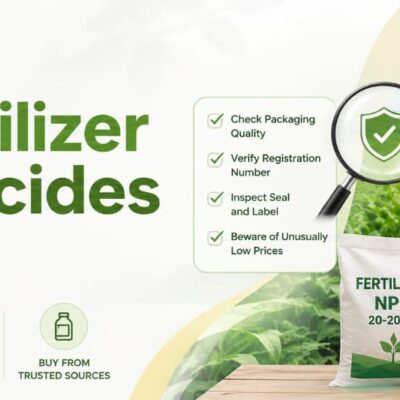
Buy from authorized distributors, recognized companies, verified wholesalers, and trusted suppliers. Ask for invoices, product registration details, batch numbers, manufacturing dates, expiry dates, and warranty or claim policies where applicable.
Avoid products that are much cheaper than normal market rates. Very low prices can be a warning sign, especially in pesticides. Counterfeit and adulterated pesticides are a known concern in Pakistan’s agriculture sector.
For supplier discovery and category comparison, buyers can explore Alahdeen’s Agriculture Category and Industrial Supplies Category.
Select Products According to Local Crops
Your product selection should match the crops grown in your area. A shop in a cotton belt will need different products from a shop in a rice-growing area. A vegetable-producing area will need more fungicides, insecticides, and foliar nutrition products. A sugarcane area may need fertilizers, herbicides, and crop-specific pest control products.
For wheat areas, commonly demanded products may include urea, DAP, NP, weedicide, zinc, and micronutrients. For rice areas, farmers may need urea, DAP, zinc, herbicides, and pest control products. For cotton areas, insecticides, plant growth products, fertilizers, and micronutrients are important. For vegetable growers, fungicides, insecticides, foliar sprays, and water-soluble fertilizers may be in demand.
If you stock products according to local crop patterns, your inventory will move faster and your cash will not get stuck.
Learn Basic Crop Advisory
A fertilizer and pesticide seller does not need to become an agronomist, but basic crop knowledge is very important. Farmers often ask what to use for yellow leaves, pest attack, weak growth, leaf curl, weeds, or low flowering. If you give random advice, the farmer may suffer.
Learn about common local crops, major pests, fertilizer timing, pesticide categories, spray precautions, and deficiency symptoms. Build relationships with agriculture officers, company representatives, and experienced field staff. This helps you give better guidance.
Also be honest when you are not sure. It is better to say, “Let us confirm first,” than to recommend the wrong product.
Storage and Safety Are Very Important
Fertilizers and pesticides should be stored properly. Fertilizer bags should be kept dry and away from moisture. Moisture can cause clumping and product damage. Pesticides should be stored in a separate, safe, and ventilated area. They should not be mixed with food items, animal feed, or household goods.
Check expiry dates regularly. Do not keep expired pesticides on shelves. Keep products away from direct sunlight and heat where required. Keep children and unauthorized people away from chemical storage.
Staff should know basic safety rules. Pesticide bottles should not be opened casually. Leaking containers should be handled carefully. Gloves, masks, and safe handling practices should be used where needed.
Good storage protects product quality and customer safety.
Pricing and Credit Management
Pricing matters in this business because farmers compare rates from different dealers. However, you should not compete only by reducing price. Your real strength should be genuine products, proper advice, availability, and trust.
Credit management is also important. Many farmers may ask for products on credit until harvest. This is common in agricultural markets, but it can become risky if not managed properly. Keep clear records of credit sales, payment dates, customer details, and outstanding amounts.
Do not give unlimited credit in the beginning. Build relationships slowly and understand customer reliability before extending larger credit.
Marketing Your Fertilizer and Pesticide Business
In this business, marketing is mostly based on trust and local reputation. Farmers talk to each other. If your product works and your advice is honest, word spreads.
You can also use simple marketing methods. Share seasonal crop tips on WhatsApp. Inform farmers when new stock arrives. Create crop-wise packages for wheat, rice, cotton, sugarcane, or vegetables. Use posters, banners, and field visits. Work with company representatives for farmer meetings.
Digital marketing can also help. A Facebook page, WhatsApp catalog, Google Business Profile, and B2B listing can make your business easier to find.
How Alahdeen Can Support Agri Businesses
Alahdeen can help buyers and businesses explore agriculture-related product categories and connect with relevant suppliers. For a fertilizer and pesticide business, supplier comparison is very important because product quality, pricing, and delivery reliability can vary.
Through the Agriculture Category, buyers can explore agri-related products and supplier options. Businesses that also need storage, industrial items, tools, packaging, or related supplies can visit the Industrial Supplies Category.
For retailers, wholesalers, and agri-input dealers, using a B2B platform can help reduce dependency on one supplier and improve sourcing options.
Common Mistakes New Dealers Should Avoid
Many new dealers make mistakes because they focus only on stock and sales. One common mistake is buying products without understanding local crop demand. Another mistake is keeping slow-moving stock that blocks cash.
Some dealers buy cheap pesticides from unknown suppliers and later face farmer complaints. This can damage reputation quickly. Another mistake is not checking expiry dates and batch details. Expired products should never be sold.
New dealers should also avoid giving advice without understanding the crop problem. Wrong pesticide recommendation can waste farmer money and damage the crop. A successful dealer focuses on trust, product quality, proper records, and long-term relationships.
FAQ’s
Is fertilizer and pesticide business profitable in Pakistan?
Yes, it can be profitable because agriculture inputs are needed every season. Profit depends on location, supplier rates, product quality, customer trust, stock planning, and credit management.
How much investment is needed to start a fertilizer and pesticide shop?
Investment depends on shop size, stock variety, location, and business model. A small shop can start with limited fast-moving products, while a wholesale or distribution setup needs much higher working capital.
Do I need a license to sell pesticides in Pakistan?
Pesticide selling usually requires compliance with agriculture department rules and may require a license or registration depending on province and product type. It is best to confirm the current requirements from your local agriculture office.
What products should a new agri-input shop keep first?
A new shop should keep products according to local crops. Common starting products include urea, DAP, NP, zinc, micronutrients, herbicides, insecticides, fungicides, and crop-specific pesticides.
How can I avoid fake fertilizer and pesticides?
Buy from authorized distributors and trusted suppliers. Check labels, batch numbers, expiry dates, packaging, invoices, and product registration details. Avoid unusually cheap or loose products.
Where can I find agriculture suppliers in Pakistan?
You can find suppliers through local markets, distributors, wholesalers, company networks, and B2B platforms. Alahdeen’s Agriculture Category can help buyers explore agri-related supplier options.
Conclusion
Starting a fertilizer and pesticide business in Pakistan can be a practical and profitable opportunity, especially in farming areas where farmers need regular crop inputs. But this business must be built on trust. Farmers depend on your products and advice for their crop performance, so quality and honesty matter more than quick sales.
To start properly, understand local crops, choose reliable suppliers, follow legal requirements, keep genuine products, manage storage safely, and build strong customer relationships. Learn basic crop advisory and avoid selling products you do not understand.
A good fertilizer and pesticide dealer does more than sell bags and bottles. They help farmers protect their crops, improve yield, and reduce risk. If you build your business around genuine products and farmer trust, it can grow season after season.
For agri-input sourcing and supplier discovery, buyers can explore Alahdeen’s Agriculture Category. For related business and industrial products, the Industrial Supplies Category can also be useful.