For many farmers in Pakistan, fertilizer is not just another farm input. It is one of the biggest decisions of the season. The wrong choice can increase cost, reduce yield, damage soil, or delay crop growth. The right choice can improve production, protect soil health, and make the farm more profitable.
This is why the debate around organic vs chemical fertilizers in Pakistan is becoming more important. Some farmers prefer chemical fertilizers because they give faster results and are easier to apply. Others are moving toward organic fertilizers because they improve soil structure, support long-term fertility, and reduce dependency on costly inputs. But the real question is not simply which one is “better.” The better question is: which fertilizer is better for your crop, your soil, your budget, and your long-term farming plan?
Pakistan’s agriculture sector relies heavily on fertilizers to maintain crop production. The Ministry of National Food Security and Research’s Fertilizer Review 2024–25 discusses fertilizer use in nutrients per hectare of cropped area, showing how important fertilizer application is for Pakistan’s cropping system. FAO has also noted that Pakistan’s nitrogen fertilizer use increased faster than phosphate and potash over past decades, creating nutrient imbalance and soil quality concerns.
For farmers, dealers, and agri-businesses looking to source reliable farm inputs, Alahdeen offers useful category discovery through the Agriculture Category and Industrial Supplies Category. These categories can help buyers compare suppliers and explore agriculture-related products in one place.
Why Fertilizer Choice Matters for Pakistani Farmers
Fertilizer choice matters because soil is not only a growing medium. It is the base of the entire crop. If the soil has weak nutrients, poor organic matter, or poor structure, the crop may not perform well even with good seed and irrigation.
Chemical fertilizers usually provide nutrients in a concentrated and fast-acting form. For example, urea provides nitrogen, DAP provides nitrogen and phosphorus, and potash-based fertilizers support potassium needs. These fertilizers are useful when crops need quick nutrient support at specific growth stages.
Organic fertilizers work differently. They improve soil health slowly by adding organic matter, improving microbial activity, supporting moisture retention, and improving soil structure. Examples include compost, farmyard manure, poultry manure, green manure, biofertilizers, and crop residue-based compost.
For many Pakistani farms, the smartest approach is not choosing one and completely rejecting the other. A balanced approach often gives better results. Chemical fertilizers can support immediate nutrient demand, while organic fertilizers can improve long-term soil health.
What Are Organic Fertilizers?
Organic fertilizers come from natural sources such as animal manure, compost, plant residues, poultry waste, green manure, biofertilizers, and decomposed organic matter. These fertilizers release nutrients slowly and help improve the soil over time.
Organic fertilizers are especially useful for improving soil texture, water-holding capacity, and microbial life. In areas where soil has become hard, weak, or low in organic matter, organic fertilizer can help restore natural fertility.
However, organic fertilizers usually do not give instant results like chemical fertilizers. They need time to decompose and release nutrients. Their nutrient content can also vary depending on source and preparation method. For example, well-prepared compost can be useful, but poorly decomposed manure may create weed, smell, or disease issues.
For farmers who want long-term soil improvement, organic fertilizers are valuable. But for high-yield commercial crops, organic fertilizer alone may not always meet full nutrient demand quickly.
What Are Chemical Fertilizers?
Chemical fertilizers are manufactured fertilizers that provide specific nutrients in concentrated form. Common examples in Pakistan include urea, DAP, NP, NPK, SSP, SOP, MOP, and micronutrient fertilizers.
The main benefit of chemical fertilizers is fast nutrient availability. When a crop needs nitrogen, phosphorus, or potassium at a specific growth stage, chemical fertilizers can provide it quickly. This is why they are widely used in wheat, rice, cotton, maize, sugarcane, vegetables, and other commercial crops.
Chemical fertilizers are also easier to measure and apply. Farmers can calculate dosage based on crop requirement, soil test, and acreage. This makes them practical for large-scale farming.
The downside is that overuse or imbalance can damage soil health over time. Excess nitrogen use without enough phosphorus, potassium, organic matter, or micronutrients can create nutrient imbalance. FAO has highlighted that nitrogen use in Pakistan grew faster than phosphate and potash, contributing to nutrient imbalance and soil quality deterioration.
Organic vs Chemical Fertilizers: Cost Comparison
Cost is one of the biggest factors for farmers. Chemical fertilizers often seem easier to calculate because they have clear market prices per bag. Organic fertilizers may look cheaper if farmyard manure or compost is locally available, but transport, labor, preparation, and application can increase the actual cost.
Chemical fertilizers usually cost more per bag, but they are concentrated, so a smaller quantity can cover a larger area. Organic fertilizers are bulkier and require more quantity per acre, which increases transport and labor cost.
For example, a farmer may need several tons of farmyard manure for one acre depending on soil condition and crop, while chemical fertilizer is applied in bags. This does not mean organic fertilizer is expensive or cheap by default. It depends on local availability, transport distance, labor cost, and crop requirement.
For farmers with livestock, organic manure may be more economical because it is already available on the farm. For farmers who must buy and transport organic fertilizer from far away, the cost can increase.
Organic vs Chemical Fertilizers: Yield Comparison
Chemical fertilizers usually give faster yield response because they provide nutrients directly. If a crop is nitrogen deficient, urea can show visible improvement quickly. If phosphorus is needed at early root development stage, DAP can support crop establishment.
Organic fertilizers improve yield differently. Their impact may be slower in the first season, but they can improve soil condition over time. Better soil structure can support root growth, moisture retention, and nutrient availability. This can improve long-term productivity.
In simple words, chemical fertilizers often help with immediate yield, while organic fertilizers support long-term soil strength. When used together properly, they can complement each other.
For many farmers, the best results come from integrated nutrient management. This means using chemical fertilizers according to crop need and soil test, while also adding organic matter through compost, manure, green manure, or crop residues. This approach can reduce overdependence on chemical inputs and improve soil health.
Which Fertilizer Is Better for Soil Health?
Organic fertilizers are generally better for soil health because they add organic matter. Soil with good organic matter holds moisture better, supports beneficial microbes, improves aeration, and reduces hardness. This is especially useful in areas where soil has become compacted or weak due to continuous cropping.
Chemical fertilizers are not bad when used correctly. The problem starts when they are overused or used without balance. If a farmer applies mostly nitrogen year after year and ignores phosphorus, potassium, micronutrients, and organic matter, the soil may become imbalanced.
A healthy soil needs more than just one nutrient. It needs a balanced nutrient supply, good structure, organic matter, and biological activity. That is why organic fertilizers are useful even when chemical fertilizers are being used.
Which Fertilizer Works Faster?
Chemical fertilizers work faster because nutrients are available in a ready or near-ready form. This is why they are preferred when crops need urgent nutrient support. For example, if wheat or maize shows nitrogen deficiency, chemical nitrogen fertilizer can give quick improvement.
Organic fertilizers work slowly because they need decomposition. Microorganisms break down organic material and release nutrients gradually. This slow release can be good for long-term soil fertility, but it may not solve urgent deficiency quickly. So, if the goal is fast crop response, chemical fertilizer is stronger. If the goal is long-term soil improvement, organic fertilizer is better.
Cost and Yield Comparison in Simple Points
Here is a simple way to understand the difference:
- Chemical fertilizers usually give faster crop response and are easier to apply in measured doses.
- Organic fertilizers improve soil health, moisture retention, and long-term fertility.
- Chemical fertilizers can increase yield quickly when used correctly.
- Organic fertilizers may take longer to show results but can improve soil condition over time.
- Chemical fertilizers are concentrated, so transport and application are easier.
- Organic fertilizers are bulky and may require more labor and transport.
- Chemical fertilizers can harm soil balance if overused or applied without soil testing.
- Organic fertilizers are safer for long-term soil structure but may not meet urgent nutrient needs alone.
- A combined approach often works better than using only one type.
Organic Fertilizers: Best Use Cases in Pakistan
Organic fertilizers are useful for farmers who want to improve soil over time. They are especially helpful in fields with weak soil structure, low organic matter, poor moisture retention, or repeated crop stress.
They are also useful for vegetable farms, orchards, kitchen gardening, organic farming, and crops where soil quality strongly affects final produce. Farmers growing fruits and vegetables may benefit from compost and manure because these crops often respond well to improved soil condition.
Organic fertilizer is also practical for farmers who already have livestock waste, poultry waste, crop residues, or composting resources. In such cases, the cost becomes more manageable.
Chemical Fertilizers: Best Use Cases in Pakistan
Chemical fertilizers are useful when crops need specific nutrients at specific times. For example, nitrogen is important for vegetative growth, phosphorus supports root development, and potassium supports crop strength, quality, and stress tolerance.
Wheat, rice, cotton, maize, sugarcane, and commercial vegetable crops often need timely fertilizer application for better yield. Chemical fertilizers are practical because they are available in standard formulations and can be applied according to crop recommendations.
However, farmers should avoid guesswork. Soil testing is a better way to decide how much fertilizer is needed. Without soil testing, farmers may over-apply one nutrient and ignore another.
Why Soil Testing Is Important Before Choosing Fertilizer
Soil testing helps farmers understand what their soil actually needs. Many farmers apply fertilizer based on habit, neighbor advice, or previous season practice. This can waste money and reduce efficiency.
A soil test can show nutrient levels, pH, organic matter condition, and possible deficiencies. Based on this information, farmers can choose the right combination of organic and chemical fertilizers.
If the soil is low in organic matter, organic fertilizer may be needed. If the soil is deficient in nitrogen, phosphorus, or potassium, chemical fertilizers may be required. If micronutrients are missing, targeted micronutrient fertilizer may help. Soil testing makes fertilizer use more accurate and cost-effective.
Which Option Is More Cost-Effective?
The most cost-effective option depends on the farm situation. If a farmer wants immediate yield response, chemical fertilizers may be more cost-effective in the short term. If a farmer wants to improve soil health and reduce dependency over time, organic fertilizers can provide long-term value.
For most farmers, the most cost-effective option is a balanced mix. Organic fertilizer improves the soil base, while chemical fertilizer supplies exact nutrients when the crop needs them.
This combined approach can improve fertilizer efficiency and reduce waste. It can also help farmers protect soil health while maintaining yield.
Common Mistakes Farmers Should Avoid
Many farmers make mistakes when using fertilizers. One common mistake is using too much urea and ignoring other nutrients. This may make the crop look green at first but can create weak plants, lodging, pest issues, or poor grain filling.
Another mistake is using fresh manure directly in the field without proper decomposition. Fresh manure can contain weed seeds, pests, pathogens, or high ammonia levels that may damage plants.
Some farmers also apply fertilizer without considering water availability. Fertilizer works best when irrigation and soil moisture are managed properly. Applying fertilizer to dry soil or before unexpected heavy rain can reduce efficiency.
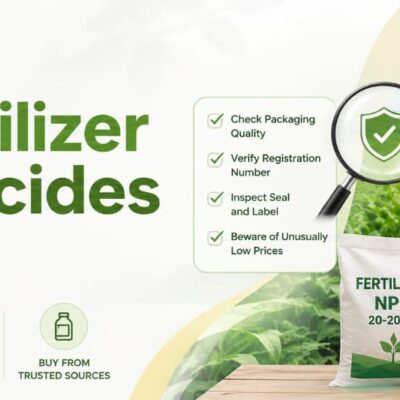
Another mistake is buying fertilizer only from unverified sellers. Fake or substandard fertilizers can damage crop performance. Farmers should buy from trusted dealers and keep purchase receipts. For agriculture-related sourcing, buyers can explore Alahdeen’s Agriculture Category and Industrial Supplies Category.
Where to Buy Fertilizers in Pakistan
Farmers can buy fertilizers from local agri-input dealers, fertilizer distributors, cooperatives, wholesalers, and B2B platforms. The most important thing is to buy from trusted suppliers who provide genuine products.
For bulk buyers, farm input dealers, and agri-businesses, supplier comparison is important. Prices, availability, product quality, delivery timelines, and dealer reputation can vary.
Alahdeen helps buyers explore agriculture and industrial supply categories in one place. Farmers, traders, and businesses can visit these categories can help buyers compare relevant product options and connect with suppliers more easily.
FAQ’s
Which is better, organic or chemical fertilizer?
Both have different benefits. Chemical fertilizers work faster and support immediate crop needs. Organic fertilizers improve soil health and long-term fertility. A balanced use of both is often better for Pakistani farms.
Is organic fertilizer cheaper than chemical fertilizer?
Organic fertilizer can be cheaper if it is available on the farm, such as manure or compost. But if it must be purchased and transported, cost can increase because organic fertilizer is bulky and needs more quantity.
Does chemical fertilizer increase yield?
Yes, chemical fertilizer can increase yield when used correctly and in balanced doses. However, overuse or imbalance can harm soil health and reduce long-term productivity.
Can organic fertilizer replace chemical fertilizer completely?
In some organic farming systems, yes, but for high-yield commercial crops, organic fertilizer alone may not meet nutrient needs quickly. Many farmers use both organic and chemical fertilizers for better results.
Why is soil testing important before fertilizer use?
Soil testing shows which nutrients are missing and helps farmers avoid overuse or underuse of fertilizers. It makes fertilizer application more accurate and cost-effective.
Conclusion
Organic and chemical fertilizers both have value in Pakistan’s agriculture. Chemical fertilizers are useful for quick nutrient supply and immediate crop response. Organic fertilizers are useful for improving soil structure, moisture retention, and long-term fertility.
The best choice depends on crop type, soil condition, budget, availability, and yield target. For many farmers, the best result comes from using both wisely. Organic fertilizer builds soil health, while chemical fertilizer supports timely nutrient demand.
Farmers should avoid guesswork and focus on soil testing, balanced nutrient use, trusted suppliers, and proper application timing. Fertilizer is not only an expense. It is an investment in crop performance and soil future. For farmers, dealers, and bulk buyers, Alahdeen makes it easier to explore agriculture-related products through the Agriculture Category and Industrial Supplies Category.

Other Articles