
Are you planning to buy textile dyeing chemicals in Pakistan but finding it difficult to judge the right price, grade, and supplier?
For fabric manufacturers, dyeing units, exporters, wholesalers, and traders, textile dyeing chemicals are not simple raw materials. They directly affect fabric shade, color fastness, softness, finishing quality, and buyer approval. A low-priced chemical may look attractive at first, but if it causes shade variation, poor washing results, or reprocessing, the total cost becomes much higher.
Textile Dyeing Chemicals in Pakistan, prices depend on chemical type, grade, concentration, brand, origin, packaging, and order quantity. This is why bulk buyers should compare rates carefully, but they should also check sample performance, documentation, supplier reliability, and the availability of repeat stock before placing a large order.
Why Textile Dyeing Chemicals Matter in Pakistan
Textile dyeing chemicals are a core part of Pakistan’s textile value chain. They help convert raw fabric into finished fabric that is ready for garments, home textiles, uniforms, towels, bedsheets, denim, and export orders.
A fabric may be made from good yarn, but if the dyeing process is weak, the final product can lose value. Poor-quality chemicals can cause shade variation, patchy color, poor wash fastness, rough hand feel, stains, and reprocessing costs.
Pakistan’s textile industry remains one of the country’s largest export sectors. TexTalks reported that during July 2025 to March 2026, Pakistan’s textile exports totaled USD 13.61 billion, almost the same as USD 13.63 billion in the same period of the previous year. This shows that textile remains a major export category even under pressure.
Pakistan Today reported that Pakistan’s textile exports reached USD 16.67 billion in the first 11 months of FY2026, reflecting continued importance of textile shipments for the economy. The chemical supply side is also important. The Pakistan Chemical Manufacturers Association noted that Pakistan has around USD 7 billion in annual chemical imports, showing how strongly the country depends on imported raw materials and petrochemicals.

For buyers looking to source textile chemicals, Alahdeen offers the Textile Dyeing & Finishing Chemical Category, Chemicals Dyes & Solvents Category, and Industrial Supplies Category.
Textile Dyeing Chemicals Price List in Pakistan 2026
Textile dyeing chemical prices in Pakistan change regularly because many products are imported or linked with global chemical markets. Prices also vary by brand, purity, shade, concentration, packaging, and supplier.
The list below gives a general price-position guide for 2026. These are not fixed rates. Buyers should confirm live wholesale prices before purchasing.
| Textile Dyeing Chemical | Common Packaging | Approx. Price Position 2026 | Common Use |
| Reactive Dyes | Bags / cartons | Medium to high | Cotton dyeing, knitwear, home textiles |
| Disperse Dyes | Bags / cartons | Medium to high | Polyester dyeing |
| Acid Dyes | Bags / cartons | Medium to high | Nylon, wool, silk, specialty textiles |
| Direct Dyes | Bags / cartons | Low to medium | Cotton and low-cost dyeing applications |
| Vat Dyes | Bags / cartons | Low to medium | Denim, workwear, high-fastness fabric |
| Sulphur Dyes | Bags / cartons | Medium | Denim, dark shades, cotton fabric |
| Softeners | Drums / cans | Medium to High | Fabric hand feel and finishing |
| Washing Agents | Drums / cans | Medium | Removal of unfixed dye and residue |
| Bleaching Chemicals | Bags / drums / cans | Medium | Fabric whitening and preparation |
| Enzymes | Drums / cans | High | Bio-polishing, denim washing, fabric finishing |
Prices can vary widely by origin and quality. Chinese, Korean, Indian, European, and local textile chemicals may all carry different rates. Export-oriented units should focus more on consistency and testing than only low price.
What Affects Textile Dyeing Chemical Prices?
Textile dyeing chemical prices are affected by several factors. Imported dyes and auxiliaries become expensive when the rupee weakens. Freight, duties, port charges, and global raw material prices also influence local rates.
Dye type matters as well. Reactive dyes, disperse dyes, vat dyes, and acid dyes do not have the same price structure. Specialty dyes and high-fastness dyes are usually more expensive than basic dyeing chemicals.
Concentration and quality also affect price. A low-cost chemical may look cheaper, but if it requires higher dosage or gives weak results, the real cost may become higher. In textile processing, cost per kg is not the only thing that matters. Cost per finished meter also matters.
Common Textile Dyeing Chemicals Used in Pakistan
Textile dyeing units in Pakistan use many types of chemicals. The right product depends on fabric type, machine type, dyeing process, shade requirement, and buyer standard.
Reactive Dyes
Reactive dyes are commonly used for cotton fabric, knitwear, towels, bedsheets, and home textiles. They are popular because they can give bright shades and good wash fastness when applied correctly.
Disperse Dyes
Disperse dyes are mainly used for polyester fabric. Polyester dyeing requires proper temperature, dispersing agents, and process control. If the process is weak, the fabric may show spots, uneven color, or poor fastness.
Acid Dyes
Acid dyes are used for nylon, wool, silk, and specialty textile applications. Buyers should check shade strength, compatibility, and fastness requirements before bulk buying.
Vat and Sulphur Dyes
Vat dyes and sulphur dyes are commonly linked with denim, dark shades, and high-fastness applications. These dyes need proper process control and technical handling.
Leveling and Dispersing Agents
Leveling agents help dye spread evenly on fabric. Dispersing agents keep dye particles stable in the dye bath, especially in polyester dyeing. These products reduce patchiness and shade variation.
Stay informed with the Alahdeen Blog: https://alahdeen.com/blogs/blogs-list/
Fixing Agents
Fixing agents improve color fastness and reduce bleeding. They are important for fabric that will be washed frequently, such as garments, towels, uniforms, and home textiles.
Softeners and Finishing Chemicals
Softeners improve fabric feel. Finishing chemicals can improve smoothness, anti-pilling, wrinkle resistance, water repellency, and other fabric properties. These chemicals affect the final touch and customer experience.
Textile Chemical Buying Guide for Fabric Manufacturers
Fabric manufacturers should start with their fabric type. Cotton, polyester, denim, knit, woven, blended fabric, and synthetic fabric all need different dyeing chemistry.
Before buying, confirm the dye class, shade, strength, application method, temperature requirement, pH condition, fastness level, and compatibility with other chemicals. A dye that works well in one factory may not perform the same in another factory if water, machine, temperature, and process timing are different.
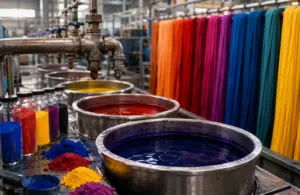
Manufacturers should always test samples before placing a bulk order. Lab testing is useful, but production trial is even better. A small test can save a large production batch from rejection.
Wholesale Buying Tips for Textile Dyeing Chemicals
Wholesale buying can reduce cost, but it should be handled carefully. Buyers should not buy large stock only because the rate is low. The chemical must perform consistently in production.
For regular-use chemicals, buyers should negotiate monthly or quarterly supply terms. This helps reduce sudden price shocks and improves stock planning. It is also smart to keep backup suppliers for critical chemicals.
Bulk buyers should check:
- Chemical grade and concentration
- Product origin
- Shade consistency
- COA and SDS availability
- Packaging condition
- Batch number
- Supplier reputation
- Delivery timeline
- Repeat stock availability
- Sample performance
This process protects both production quality and business cash flow.
Why Shade Consistency Matters for Exporters
Shade consistency is one of the most important quality factors in textile exports. Export buyers often approve a specific shade, and the full production must match that standard. If dye quality changes between batches, the fabric may not math the approved sample.
This can cause reprocessing, shipment delay, buyer complaints, and financial loss. Exporters should buy from suppliers who can provide consistent dye strength and repeat quality.
For exporters, color fastness is also critical. Washing fastness, rubbing fastness, light fastness, and perspiration fastness may be tested depending on buyer requirements. Cheap dyes that fail fastness tests can become very expensive later.
How to Choose a Reliable Textile Chemical Supplier
A reliable supplier should understand textile processing, not just sell chemical names. They should know the difference between cotton dyeing textile, polyester dyeing, denim washing, knit finishing, and export-quality requirements.
Before choosing a supplier, ask about product origin, grade, concentration, technical support, packaging, delivery time, and documentation. Serious suppliers should be able to provide product specifications and safety details.
If a supplier cannot provide basic information or avoids quality questions, buyers should be careful. Alahdeen can support supplier discovery through the Textile Dyeing & Finishing Chemical Category and Chemicals Dyes & Solvents Category.
Documents Textile Chemical Buyers Should Ask For
Documentation helps protect buyers and supports quality control.
Certificate of Analysis
A Certificate of Analysis shows batch-level quality details. For dyes and chemicals, it may include purity, strength, pH, moisture, or other technical values.
Safety Data Sheet
A Safety Data Sheet explains safe handling, storage, hazards, first aid, and disposal instructions. This is important for factory safety.
Technical Data Sheet
A technical data sheet explains application method, dosage range, compatibility, and usage conditions.
Invoice and Batch Details
Invoice and batch records help buyers track product quality and repeat orders. These records are also useful if a complaint appears later.
- Link to “How to Source Chemicals Dyes and Solvents in Pakistan for Business Use.”
Why Alahdeen Helps Textile Chemical Buyers
Textile chemical sourcing can be difficult because buyers need to compare price, quality, availability, and supplier trust. Alahdeen helps buyers explore relevant categories and connect with suppliers more efficiently.
This is helpful for dyeing units, fabric manufacturers, traders, wholesalers, and exporters who need regular chemical supply. Buyers can explore categories, compare supplier options, request quotes, and reduce dependency on one local supplier. For businesses, this can save time and improve sourcing decisions.
Storage and Safety Tips
Textile dyeing chemicals should be stored properly to maintain quality. Dyes should be kept dry and protected from moisture. Liquid chemicals should be sealed and stored according to supplier instructions. Strong chemicals should be handled with gloves, masks, goggles, and proper ventilation where needed.
Factories should keep chemicals labeled and separated. Staff should know basic safety steps and should not mix chemicals without guidance. Poor storage can reduce chemical performance and create safety risks.
Common Mistakes Buyers Should Avoid
Many buyers make the mistake of buying the cheapest chemical without testing. If the product causes shade variation, poor fastness, or reprocessing, the cheaper rate becomes a loss.
Another mistake is buying without checking grade, concentration, or documentation. Some buyers also depend on only one supplier, which can create problems if stock becomes short. Exporters should avoid changing dye suppliers during an order without proper testing. Even small shade differences can create buyer complaints.
FAQ’s
What are textile dyeing chemicals used for?
Textile dyeing chemicals are used for fabric preparation, dyeing, fixing, washing, softening, finishing, and improving color fastness.
What is the textile dyeing chemicals price list in Pakistan 2026?
Prices vary by dye type, chemical grade, concentration, packaging, origin, and supplier. Reactive dyes, disperse dyes, fixing agents, softeners, and finishing chemicals all have different price ranges.
Which dyes are used for cotton fabric?
Reactive dyes are commonly used for cotton fabric because they can provide bright shades and good wash fastness when applied properly.
Which dyes are used for polyester fabric?
Disperse dyes are commonly used for polyester fabric. They require proper process control, temperature, and dispersing agents.
Why is shade consistency important?
Shade consistency is important because export buyers approve a specific fabric shade. If production does not match the approved shade, the order may face rejection or reprocessing.
Should buyers test textile chemicals before bulk orders?
Yes, buyers should test samples before bulk orders. Lab and production trials help confirm performance before large-scale use.
Where can I buy textile dyeing chemicals in Pakistan?
Buyers can source textile dyeing chemicals from importers, distributors, chemical markets, wholesalers, and B2B platforms like Alahdeen.
How can Alahdeen help textile chemical buyers?
Alahdeen helps buyers explore textile dyeing chemical categories, compare supplier options, and source products such as dyes, softeners, fixing agents, dispersing agents, and finishing chemicals.
Conclusion
Textile dyeing chemicals are essential for Pakistan’s fabric manufacturing and export industry. They affect shade, fastness, softness, finishing, and buyer approval. In 2026, prices depend on dye type, grade, origin, concentration, packaging, and supplier availability.
Manufacturers and exporters should not buy only by price. They should test samples, check documentation, confirm supplier reliability, and choose chemicals that match their fabric and process requirements.
Premium Textile Dyeing Chemicals at Wholesale Prices
Achieve vibrant, long-lasting colors with premium textile dyeing chemicals. Get competitive wholesale prices and request your free quote today.