Laboratories today are not what they used to be. A few years ago, having a basic instrument that could give acceptable results was enough. But now, expectations have shifted. Labs are under constant pressure to deliver faster results, maintain higher accuracy, and handle larger sample volumes all at the same time.
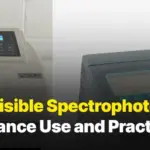
This shift has forced many labs to rethink their equipment choices. Instead of relying on entry-level instruments, they are now looking for systems that offer a balance between performance and practicality. That’s exactly where Thermo Scientific Evolution One/One Plus UV-Vis Spectrophotometers come into play.
These instruments are designed to bridge the gap between basic and advanced systems. They are not overly complicated, yet they provide enough capability to handle both routine and moderately complex analysis. For many labs, this balance is what makes them a smart and practical investment.
Why UV-Vis Spectrophotometers Like Evolution One/One Plus Matter Today
In simple terms, spectrophotometers measure how substances interact with light. But in real-world applications, their role is much more important. They help identify chemical compositions, detect impurities, and ensure product quality across various industries.
The Thermo Scientific Evolution One/One Plus UV-Vis Spectrophotometers go a step further by covering both ultraviolet and visible ranges. This means they can detect compounds that basic visible spectrophotometers cannot.
This capability has become increasingly important. According to industry data, laboratories that use UV-Vis spectrophotometers experience up to 25–30% improvement in analytical accuracy compared to those relying only on visible-range instruments.
In industries like pharmaceuticals and environmental testing, this level of precision is not optional it is required. Even small inaccuracies can lead to compliance issues or product failures. That is why many labs are now upgrading to systems like the Evolution series. To get more information read this on, https://www.thermofisher.com/order/catalog/product/840-341400
A Closer Look at How Evolution One/One Plus Actually Works
The working principle behind the Thermo Scientific Evolution One/One Plus UV-Vis Spectrophotometers is based on light absorption. The instrument passes a beam of light through a sample and measures how much of that light is absorbed.
While this sounds simple, the real advantage lies in how the system handles different wavelengths. By operating across both UV and visible ranges, it allows for more detailed and accurate analysis.
The use of dual light sources deuterium for UV and tungsten for visible ensures consistent performance across the entire wavelength range. This reduces variability in results and improves reliability.
For lab users, this means fewer errors and less need for repeated testing. It also simplifies the process, as one instrument can handle multiple types of analysis without requiring separate systems.
Key Specifications That Define Performance
Understanding the specifications of the Thermo Scientific Evolution One/One Plus UV-Vis Spectrophotometers helps translate technical features into practical benefits.
| Specification | Details |
| Wavelength Range | 190 – 1100 nm |
| Optical System | Single beam |
| Light Sources | Deuterium & Tungsten |
| Spectral Bandwidth | ~2 nm |
| Photometric Range | -3 to 3 Abs |
| Measurement Modes | Absorbance, %T, Concentration |
| Interface | Digital, user-friendly |
| Application Scope | Routine + advanced UV-Vis |
These specifications highlight that the instrument is capable of handling a wide range of applications. The extended wavelength range allows it to perform both basic and advanced analysis, while the simple interface ensures ease of use.
In practical terms, this means labs can rely on a single instrument for multiple tasks, reducing both cost and complexity.
Where These Spectrophotometers Fit in Real Lab Work
The versatility of the Thermo Scientific Evolution One/One Plus UV-Vis Spectrophotometers makes them suitable for a wide range of industries.
In pharmaceutical labs, they are used for drug formulation and quality control. The ability to analyze compounds in the UV range helps ensure that products meet strict regulatory standards.
Environmental labs use these instruments to test water and soil samples. Detecting contaminants accurately is critical, and UV-Vis systems provide the precision needed for such analysis. Food and beverage industries rely on them for quality assurance, ensuring consistency and safety in products. Educational institutions also use them as teaching tools, helping students understand both UV and visible spectrophotometry.
This wide application range is one of the biggest advantages of the Evolution series. It allows labs to use a single instrument across multiple functions.
Strengths and Limitations You Should Know Before Choosing
Every instrument comes with its own strengths and limitations. Understanding these helps in making a more informed decision.
- Wide Wavelength Coverage
Supports both UV and visible analysis, making it versatile - Improved Accuracy
Delivers more precise results compared to basic systems - Efficient Workflow
Faster testing and better data handling improve productivity - User-Friendly Operation
Designed for ease of use, reducing training time - Higher Initial Cost
More expensive than entry-level spectrophotometers - Limited Automation Compared to High-End Systems
Does not fully match advanced automated instruments
These points show that while the system is powerful, it is designed for balance rather than extremes.
Evolution One vs One Plus What’s the Real Difference
Although both models fall under the Thermo Scientific Evolution One/One Plus UV-Vis Spectrophotometers, there are subtle differences between them.
The Evolution One is suited for standard applications where reliability and consistency are the main priorities. It provides stable performance without additional complexity. The Evolution One Plus, on the other hand, offers enhanced features that improve usability and workflow. This may include better software integration and a more advanced interface.
For labs with basic needs, the Evolution One is sufficient. For those looking for more flexibility and efficiency, the One Plus offers added value.
Is It Worth the Investment for Your Lab
When evaluating the Thermo Scientific Evolution One/One Plus UV-Vis Spectrophotometers, cost should not be the only factor. The focus should be on long-term value. While the initial investment is higher than that of basic instruments, the benefits often outweigh the cost. Improved accuracy reduces errors, while better efficiency saves time.
Research shows that labs using optimized instruments can reduce operational inefficiencies by up to 20%, which directly impacts overall costs.
For growing labs, this makes the Evolution series a practical choice. It provides sufficient capability to meet current needs while supporting future growth. To save time and money for the online platform in Pakistan, bringing the opportunity to get quality Thermo Scientific Evolution One/One Plus UV-Vis Spectrophotometers across Pakistan.
A Practical Approach to Choosing the Right Spectrophotometer
Selecting the right instrument requires more than just comparing specifications. It involves understanding your lab’s actual requirements.
Consider your daily workload, the type of samples you handle, and whether you need UV capability. These factors play a major role in determining the right choice.
Instead of relying on a single vendor, platforms like Alahdeen allow you to compare multiple options and evaluate pricing. This helps you make a more informed decision and ensures better value.
FAQs
Q: What are Thermo Scientific Evolution One/One Plus UV-Vis Spectrophotometers used for?
A: They are used for measuring absorbance and concentration in both UV and visible ranges across multiple industries
Q: What is the wavelength range?
A: The wavelength range is approximately 190 to 1100 nm
Q: What is the difference between Evolution One and One Plus?
A: The One Plus offers additional features for improved workflow and usability
Q: Are these suitable for research labs?
A: Yes, they are suitable for moderate-level research and advanced routine testing
Q: Are they easy to use?
A: Yes, they are designed to be user-friendly despite offering advanced capabilities
Conclusion
The Thermo Scientific Evolution One/One Plus UV-Vis Spectrophotometers are designed for labs that need more than basic functionality but do not require extremely advanced systems.
They offer a strong balance between performance, usability, and flexibility. This makes them suitable for a wide range of applications without adding unnecessary complexity. In today’s lab environment, the best choice is not always the most advanced instrument. It is the one that fits your workflow and supports your long-term goals.