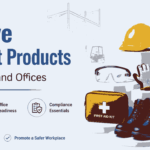
Do you know the global fire safety equipment market is growing?
According to the statistics, the size was valued at USD 61.42 billion in 2025. The market is projected to grow from USD 65.16 billion in 2026 to USD 104.49 billion by 2034, exhibiting a CAGR of 6.08% during the forecast period.
Electrical safety is no longer only about installing wires, breakers, switches, panels, and cables correctly. In commercial and industrial buildings, electrical installation must also include fire equipment safety from the planning stage. The reason is simple: when electrical systems fail, the result is not always just a power outage. In many cases, it can become a fire.
Fire risk linked with electrical faults is a serious concern worldwide and in Pakistan. NFPA reported that from 2017 to 2021, United States fire departments responded to an estimated annual average of 36,784 fires in industrial or manufacturing properties.
Locally, Pakistan has also seen repeated commercial fire incidents where suspected short circuits were reported as possible causes. In January 2026, a major fire at Gul Plaza in Karachi was believed to have started due to a short circuit, with AP reporting that the death toll could rise after rescuers found additional remains during search operations.
These incidents show why businesses should not treat fire protection as an afterthought. A building may have expensive machinery, modern panels, LED lighting, UPS systems, generators, servers, and air conditioning, but if fire detection and response equipment is missing or poorly maintained, the entire facility remains exposed.
Businesses can explore related electrical items through the Electronics & Electrical Category, and safety-focused products through the Safety Equipment & Systems Category on Alahdeen.
Understanding the Link Between Electrical Systems and Fire Risks
Electrical systems carry power throughout a building. They support lights, fans, motors, machines, computers, cameras, lifts, HVAC systems, servers, appliances, and production equipment. When these systems are designed, installed, or maintained poorly, they can become a direct source of fire risk.
The problem often starts small. A loose connection heats up. A cable is overloaded. A breaker is bypassed. A low-quality component fails. Dust gathers inside a panel. A machine draws more current than the circuit can handle. These issues may not create a visible problem immediately, but over time they can lead to overheating, sparks, arcing, insulation damage, and fire.
Common Causes of Electrical Fires
Overloaded circuits are one of the most common risks. This happens when too many devices or machines draw power from a circuit that was not designed for that load. In offices, this may happen through extension boards and multiple devices. In factories, it may happen when equipment load increases without upgrading the electrical system.
Faulty wiring is another major risk. Old wires, poor joints, damaged insulation, undersized cables, and loose connections can all increase fire danger. Poor wiring becomes even more dangerous in buildings where machines, ACs, heaters, compressors, or heavy electrical equipment run for long hours.
Short circuits can create sudden heat and sparks. They usually occur when live and neutral wires touch, insulation fails, or electrical components malfunction. In markets and commercial buildings, short circuits can spread fire quickly if flammable materials, plastic packaging, cloth, wood, or stored goods are nearby.
Poor maintenance also increases risk. Electrical rooms, panels, breakers, and cable trays need inspection. Dust, moisture, heat, loose terminals, and ageing components can create dangerous conditions if ignored.
Low-quality electrical components are another problem. Cheap switches, sockets, breakers, wires, and connectors may save money during installation, but they can fail under load and create long-term safety concerns.
Industries Most at Risk
Factories are highly exposed because they use motors, machines, control panels, compressors, welding equipment, and heavy loads. A small electrical fault can stop production or create a serious hazard.
Warehouses also face high fire risk because they often store packaging material, cartons, plastic, chemicals, fabric, paper, or other combustible stock. If a fire starts from wiring or equipment, stored goods can help it spread quickly.
Shopping centers need strong electrical and fire safety planning because many shops operate lights, ACs, signage, sockets, and display equipment in one building. The Karachi Gul Plaza fire in January 2026 is an example of how serious commercial fires can become when a fire spreads in a dense market environment.
Offices may appear safer, but they still contain computers, servers, printers, UPS systems, chargers, wiring ducts, and air conditioning systems. Overloaded sockets and poor cable management can create risks.
Hospitals need even higher safety standards because they operate medical equipment, oxygen systems, emergency rooms, electrical backup, lifts, laboratories, and sensitive patient areas. Fire safety failure in such buildings can directly affect lives.
Why Fire Equipment Safety Matters in Electrical Projects
Fire equipment safety matters because electrical protection alone cannot fully control every fire situation. A circuit breaker may trip during overload, but it may not detect smoke early. A surge protector may protect equipment from voltage spikes, but it cannot guide people during evacuation. A fire extinguisher can control a small fire, but only if it is placed correctly and staff know how to use it.
Protecting Lives
The first purpose of fire safety is life protection. In any fire incident, the early minutes are critical. Smoke, panic, blocked exits, poor visibility, and confusion can put people at risk. Fire alarms, smoke detectors, emergency exit signs, and evacuation plans help people move out quickly.
In commercial and industrial buildings, fire safety should be planned for employees, customers, visitors, contractors, and security staff. It should not depend on one person knowing what to do.
Protecting Property and Equipment
Electrical fires can damage panels, machines, cables, stock, furniture, servers, documents, and building structure. In factories and warehouses, losses can become much larger than the initial electrical fault.
Fire equipment such as extinguishers, hose reels, detection systems, and suppression systems can help control a fire before it spreads. This reduces damage and supports faster recovery.
Reducing Business Downtime
A fire can stop business operations for days, weeks, or even months. Production may stop. Stock may be lost. Machinery may need replacement. Insurance claims can take time. Customers may shift to competitors.
Fire safety equipment reduces downtime by helping detect and control incidents early. For industries, this is not only a safety matter but also a business continuity issue.
Meeting Safety Regulations and Standards
Businesses also need to consider safety regulations, inspections, insurance requirements, and workplace safety standards. OSHA states that employers are responsible for inspection, maintenance, and testing of portable fire extinguishers in the workplace, and portable extinguishers must be visually inspected monthly.
Even where local enforcement varies, responsible businesses should follow recognized safety practices. Compliance protects both people and the company.
Essential Fire Equipment Safety Solutions for Electrical Installations
A safe electrical project should include suitable fire equipment according to building size, usage, risk level, and materials present inside the facility. A small office, large warehouse, hospital, data center, and factory will not need the exact same setup, but every project should include fire protection planning.
Fire Extinguishers
Fire extinguishers are the first response tool for many small fires. They should be installed in visible, accessible, and properly marked locations. Staff should know which extinguisher to use and how to operate it.
CO2 extinguishers are commonly used around electrical equipment because they do not leave the same residue as dry chemical extinguishers. They are suitable for electrical panels, server areas, control rooms, and offices where sensitive equipment is present.
Dry chemical extinguishers are useful for many general fire risks and can handle multiple fire classes depending on the type. They are commonly used in commercial and industrial spaces, but residue can affect sensitive equipment.
The extinguisher type should match the risk. Electrical rooms, server rooms, warehouses, kitchens, and machinery areas may require different fire extinguisher planning.
Fire Alarm Systems
Fire alarm systems help detect and alert people early. In a large building, people may not immediately notice smoke or fire in another section. A fire alarm system gives a warning so people can respond before the situation becomes worse.
Manual alarm systems allow people to trigger an alarm when they see a fire. Automatic systems can connect with detectors and alert occupants when smoke or heat is detected.
For factories, offices, hospitals, shopping centers, and warehouses, alarms should be planned according to building layout and occupancy.
Smoke Detectors
Smoke detectors identify smoke before flames become large. They are useful in offices, corridors, storage rooms, commercial areas, and many indoor spaces.
Different detector types may be used depending on the environment. Some detect smoke particles quickly, while others may be better for areas where false alarms need to be reduced.
Installation should be planned carefully because detector placement affects performance. A smoke detector hidden in the wrong place may not detect smoke early enough.
Heat Detectors
Heat detectors respond to temperature rise rather than smoke. They are useful in areas where smoke detectors may cause false alarms, such as dusty spaces, kitchens, workshops, generator rooms, or industrial areas.
Heat detectors perform better where smoke, steam, or dust may normally be present. However, they may respond later than smoke detectors, so they should be selected according to area risk.
Emergency Exit Signs
Emergency exit signs are critical during evacuation. In a fire, smoke can reduce visibility and people may panic. Clear illuminated signs help guide people toward exits.
Exit signs should be installed in corridors, staircases, large halls, factories, offices, shopping areas, and warehouses. They should remain visible and functional during power failure.
Fire Hose Reels
Fire hose reels are useful in large commercial and industrial facilities where trained staff may need to respond before firefighters arrive. They provide a continuous water supply for certain fire types.
They are commonly installed in factories, warehouses, large offices, schools, hospitals, and commercial buildings. However, staff must be trained because using water on some electrical fires can be dangerous.
Fire Suppression Systems
Fire suppression systems are used where ordinary extinguishers may not be enough or where sensitive equipment needs protection. Server rooms, data centers, electrical control rooms, UPS rooms, and communication rooms often require specialized suppression systems.
These systems may use clean agents, gas-based suppression, or other suitable technologies depending on the risk. The goal is to control fire quickly while reducing damage to equipment.
Electrical Safety Equipment That Supports Fire Prevention
Fire safety is stronger when electrical prevention systems are also included. Fire equipment helps respond to a fire, but electrical safety devices help reduce the chance of fire starting in the first place.
Circuit Breakers
Circuit breakers protect electrical circuits from overload and short circuits. If the current becomes too high, the breaker trips and disconnects the circuit.
Using the correct breaker rating is important. Oversized or poor-quality breakers may not protect the circuit properly. Breakers should be selected according to load calculation and installation requirements.
Residual Current Devices RCDs
RCDs detect leakage current and disconnect power quickly. They are important for reducing electric shock risk and supporting safer installations.
In wet areas, outdoor installations, workshops, and high-risk environments, RCDs can add an important layer of protection.
Surge Protection Devices
Surge protection devices protect equipment from voltage spikes caused by lightning, switching, or unstable supply conditions. In Pakistan, voltage fluctuation can be a concern for many businesses, so surge protection is useful for electronics, machines, servers, and control systems.
Insulated Electrical Tools
Insulated tools reduce risk when electricians work around live or sensitive electrical systems. Screwdrivers, pliers, cutters, and other tools should be properly rated for electrical work.
Using normal tools for electrical work can be dangerous.
Safety Gloves and Protective Equipment
Safety gloves, face shields, insulated mats, helmets, safety shoes, and protective clothing help reduce injury risk during electrical work and fire response.
Workers handling panels, wires, batteries, generators, or high-load equipment should use proper protective equipment.
Key Areas Where Fire Safety Equipment Should Be Installed
Fire equipment should not be installed randomly. It should be placed according to risk areas, building layout, evacuation routes, and operational needs.
Electrical Control Rooms
Electrical control rooms contain panels, breakers, cables, switches, relays, UPS systems, and control devices. A fire in this area can shut down the entire building or facility.
CO2 extinguishers, smoke or heat detection, clean agent suppression, and restricted access should be considered in these rooms.
Manufacturing Facilities
Manufacturing facilities need fire extinguishers, alarms, hose reels, emergency signs, and detection systems based on risk zones. Areas near machinery, electrical panels, storage, and production lines should be prioritized.
Warehouses
Warehouses often store large quantities of stock. Fire can spread quickly if packaging material, plastics, cartons, fabric, or chemicals are present.
Detection systems, hose reels, extinguishers, exit signs, and clear access routes are important.
Office Buildings
Offices need fire alarms, extinguishers, smoke detectors, emergency signs, and safe electrical design. Server rooms and UPS areas may require additional protection.
Data Centers
Data centers contain servers, networking equipment, cooling systems, UPS batteries, cables, and power distribution units. Fire suppression systems are especially important because water-based firefighting can damage equipment.
Common Mistakes Businesses Make
Many businesses install electrical systems first and think about fire equipment later. This creates gaps in safety planning.
Ignoring Fire Risk Assessments
Without a risk assessment, businesses may not know where the highest danger exists. A warehouse, control room, kitchen, server room, and production area all have different fire risks.
Using Outdated Equipment
Expired extinguishers, weak alarms, faulty detectors, and damaged emergency lights are common problems. Fire equipment must remain functional, not just installed for formality.
Lack of Employee Training
Equipment is only useful if people know what to do. Staff should know evacuation routes, alarm points, extinguisher locations, and basic emergency response.
Poor Equipment Maintenance
Fire equipment needs inspection and maintenance. OSHA requires employers to handle inspection, maintenance, and testing of workplace extinguishers, including monthly visual inspections of portable extinguishers.
Best Practices for Integrating Fire Equipment Safety Into Electrical Projects
Fire equipment safety should be planned together with electrical design. This approach is better than adding safety products after the building is already complete.
Conduct Risk Assessments
Before installation, identify high-risk areas such as control rooms, server rooms, storage areas, production zones, kitchens, generator rooms, and battery rooms.
Use Certified Products
Certified and properly rated products are important. Low-quality fire equipment may fail when needed. Fire extinguishers, alarms, detectors, cables, breakers, and protective devices should match project requirements.
Train Staff Regularly
Staff should understand alarm response, evacuation routes, extinguisher use, and emergency reporting. Training should not happen only once. It should be repeated regularly.
Schedule Routine Inspections
Inspection schedules should include extinguishers, alarms, detectors, emergency lights, exit signs, panels, breakers, wiring, and electrical rooms.
Create Emergency Response Plans
Every business should have a clear emergency response plan. It should mention who raises the alarm, who guides evacuation, who contacts emergency services, and where people gather after evacuation.
How to Choose Reliable Safety Equipment Suppliers
Choosing the right supplier is important because fire equipment is not an ordinary purchase. These products are expected to work in emergencies.
Product Quality
Buyers should check extinguisher type, detector quality, alarm system reliability, build quality, and suitability for the building.
Certifications
Certifications and compliance details help confirm that the product meets safety requirements. For commercial and industrial projects, documentation may be needed for audits, insurance, or inspections.
Technical Support
Fire safety products often need planning, installation, testing, and maintenance. A supplier with technical knowledge can guide buyers better than a seller who only provides product prices.
After-Sales Service
After-sales support is important for refilling extinguishers, replacing detectors, testing alarms, maintaining systems, and upgrading equipment.
Future Trends in Fire Equipment Safety and Electrical Protection
Fire safety is becoming smarter. Businesses are moving from basic equipment only to connected systems that detect, alert, and monitor risks faster.
The global fire safety equipment market was valued at USD 60.48 billion in 2025 and is projected to reach USD 96.82 billion by 2033, growing at a CAGR of 6.0 percent from 2026 to 2033. Market growth is supported by wireless sensor networks and increased adoption of wireless fire sensing devices.
Smart Fire Detection Systems
Smart detection systems can identify smoke, heat, or abnormal conditions faster and provide alerts to building managers or security teams.
IoT Enabled Monitoring
IoT enabled systems allow real-time monitoring of alarms, detectors, extinguishers, and building safety devices. This helps businesses track system status more efficiently.
AI Based Safety Alerts
AI based systems can analyze patterns and issue early warnings based on unusual temperature, smoke, or electrical behavior. This is useful in large facilities and high-risk environments.
Integrated Building Management Systems
Fire systems are increasingly being connected with building management systems, CCTV, access control, HVAC, and emergency lighting. Integration improves response time and coordination during emergencies.
FAQs
Q1: Why is fire equipment safety important in electrical installation projects?
Fire equipment safety is important because electrical faults like overloaded circuits, short circuits, faulty wiring, and poor maintenance can cause fires, so alarms, extinguishers, detectors, and suppression systems help protect lives, property, and business operations.
Q2: Which fire safety equipment should businesses install near electrical systems?
Businesses should install suitable fire extinguishers, smoke detectors, heat detectors, fire alarm systems, emergency exit signs, fire hose reels, and fire suppression systems in high-risk areas like electrical rooms, warehouses, offices, factories, and data centers.
Conclusion
Fire equipment safety should be part of every electrical installation project because electrical faults can create serious risks for people, property, equipment, and business continuity. Overloaded circuits, faulty wiring, short circuits, poor maintenance, and low-quality components can turn an electrical system into a fire hazard.
A safer project combines both prevention and response. Electrical protection devices such as breakers, RCDs, surge protectors, insulated tools, and protective equipment help reduce fire risk. Fire safety equipment such as extinguishers, alarms, smoke detectors, heat detectors, exit signs, hose reels, and suppression systems helps detect and control incidents early.
For factories, warehouses, offices, hospitals, shopping centers, data centers, and commercial buildings, fire safety is not optional. It protects lives, reduces losses, supports compliance, and helps businesses continue operations after emergencies.
Businesses planning electrical projects should include fire risk assessment, certified products, staff training, routine inspections, and emergency response planning from the beginning.