Have you noticed more salons adding laser hair removal to their service menus instead of depending only on waxing, threading, and traditional hair-removal treatments?
In 2026, beauty salons are looking for services that can increase customer retention, improve revenue per appointment, and give clients a reason to return for a complete treatment course. Laser hair removal fits naturally into this model because it is not usually a one-visit service. The American Academy of Dermatology explains that removing unwanted hair with laser treatment commonly requires multiple sessions, and repeat treatments may also be needed when hair regrows.
For salon owners, this can turn hair removal from an occasional low-ticket service into a longer customer relationship. Instead of serving the same client only when they need waxing or threading, salons offering appropriately operated laser treatments can schedule several sessions over a period of time. However, purchasing a professional Laser Hair Removal Machine is a serious business decision. Device technology, wavelength, cooling system, operator training, skin-tone suitability, warranty, maintenance, documentation, and safety all need to be considered before price.
Salon owners and beauty businesses looking for professional beauty equipment can begin exploring suppliers through the Alahdeen B2B Marketplace. Buying through wholesale channels can make it easier to compare equipment, negotiate commercial prices, ask about after-sales support, and discuss complete salon requirements rather than purchasing equipment as an ordinary retail customer.
Why Laser Hair Removal Is Becoming More Attractive to Salon Owners
Traditional salon hair-removal services such as waxing and threading are still widely used, but they require customers to return every time visible hair grows again. Laser hair removal offers a different proposition because it is designed to produce longer-term hair reduction through repeated treatment of hair follicles. The American Academy of Dermatology notes that several treatment sessions are generally required and that results vary according to factors such as treatment area, hair characteristics, and individual response.
From a salon-business perspective, this creates a service that can be sold as a treatment plan rather than a single appointment. A customer interested in the underarms, face, legs, arms, or other suitable areas may book multiple sessions according to professional assessment and device guidance. This allows salons to develop recurring revenue while building stronger relationships with clients who may also purchase skincare, facials, manicure services, or other treatments.
Another reason salon owners are considering these machines is customer convenience. Many clients prefer reducing the frequency of shaving, waxing, or threading. When the service is performed appropriately using suitable equipment and experienced operators, laser hair removal can become a premium addition to an established beauty business. It should nevertheless be promoted realistically rather than as a guaranteed permanent solution for every person.
Wholesale Buying Can Reduce the Initial Equipment Cost
Professional beauty machines can represent a significant investment, particularly for smaller salons. Buying through a retail intermediary may add additional markup that makes the machine more difficult to justify financially. This is one reason salon owners look for importers, distributors, manufacturers, and B2B marketplaces when purchasing equipment.
Wholesale purchasing can provide access to commercial quotations, especially when a salon is opening a new branch, purchasing several machines, or combining laser equipment with facial machines, steamers, salon furniture, sterilisation products, and other professional equipment. Buyers may also be able to negotiate training, delivery, accessories, spare parts, or installation into the package rather than considering only the machine price.
Stay informed with the Alahdeen Blog: https://alahdeen.com/blogs/blogs-list/
The lowest quotation, however, should never be the main reason for purchasing a laser device. A cheap machine that provides inconsistent energy delivery, weak cooling, unclear documentation, or no technical support can become much more expensive after customer complaints or equipment failure. The best wholesale deal is the combination of appropriate equipment, credible documentation, operator support, dependable warranty, and a commercially reasonable price.
Salon owners can use Alahdeen to begin comparing suppliers and discussing wholesale requirements before committing a large amount of capital.
Laser Hair Removal Can Increase Revenue per Customer
A salon normally has limited chairs, treatment rooms, employees, and operating hours. This means growth does not always come from attracting more people through the door. Sometimes it comes from increasing the value of the services purchased by existing customers.
Laser hair removal can support that strategy because treatment is generally carried out over several appointments rather than completed in a single session. A salon may offer individual sessions, packages for one treatment area, or multiple-area packages. Clients who already visit the salon for waxing, facials, bridal services, or skincare treatments may become the first audience for the new service.
This does not mean every salon should immediately purchase a machine. Owners should first estimate how many existing customers are genuinely interested, what competitors charge, how many appointments would be required to recover the investment, and how much trained staff time will be needed. A machine generating only a few appointments per month may take much longer to recover its purchase cost than the salesperson suggests.
The business case becomes much stronger when the salon already has a regular customer base and enough demand to keep the treatment room productively booked.
Multiple Sessions Can Encourage Repeat Business
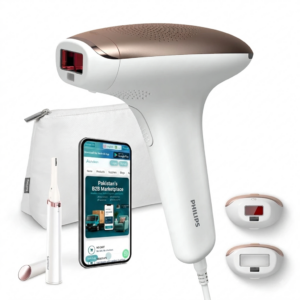
One of the major commercial differences between Ipl Hair Removal Device and many ordinary salon treatments is that clients generally require a series of sessions. Hair grows in cycles, and not every follicle can be effectively targeted during one appointment. The AAD states that laser hair removal commonly requires six treatments or more, although the exact number differs between individuals and treatment areas.
For salon owners, this means one customer enquiry can potentially lead to several future appointments when the individual is an appropriate candidate and chooses to proceed. Packages can also make future bookings more predictable and help the salon plan operator schedules.
However, repeat appointments should never be presented as guaranteed results after a fixed number of visits. Hair colour, skin tone, hormones, treatment area, device type, treatment settings, and individual biology can all affect outcomes. Facial hair in women, for example, can be influenced by hormones and may require ongoing maintenance.
Clear expectations build stronger long-term customer relationships than unrealistic promises such as “100% permanent hair removal in three sessions.”
Understanding Laser and IPL Before Buying Is Essential
One of the biggest sources of confusion in the beauty-equipment market is the use of the terms laser and IPL as though they describe the same technology.
They do not.
Laser hair-removal equipment uses concentrated light at particular wavelengths, while IPL, or intense pulsed light, uses broader-spectrum light. Machines may also differ significantly in output, cooling, pulse characteristics, intended skin types, and professional applications.
Some suppliers loosely advertise every light-based hair-removal device as a “laser machine,” making it important for buyers to request the exact technology rather than accepting the product title. A salon owner purchasing an expensive professional system should know whether the machine uses diode laser technology, alexandrite, Nd: YAG, IPL, or another configuration.
The FDA regulates laser devices and recognises light-based hair-removal devices as products whose safety and performance need proper attention. The product documentation should therefore clearly identify what technology is actually being supplied.
When starting a retail business, choosing products that already have strong customer demand can help reduce the risk of slow-moving inventory. From cosmetics and personal care items to footwear, kitchen products, and everyday accessories, understanding current buying trends can help retailers make smarter purchasing decisions. Exploring the Best Selling Product in Pakistan can give business buyers useful ideas about products that are popular in the local market.
Why Diode Laser Machines Receive So Much Attention
Diode laser machines are widely discussed in the professional hair-removal market because they are designed specifically around laser-based hair reduction and can be configured for different professional applications depending on the equipment.
Salon buyers may encounter machines advertised with wavelengths such as 755 nm, 808 nm, and 1064 nm, either individually or combined within one handpiece. Different wavelengths interact with skin and hair differently, which is why a multi-wavelength label should not simply be interpreted as “more wavelengths means better machine.”
The effectiveness and safety of the system depend on much more than the wavelength printed on the casing. Energy settings, pulse duration, cooling performance, spot size, operator knowledge, client assessment, skin tone, and hair characteristics are all important.
Before ordering a diode machine wholesale, ask the supplier for technical documentation showing the actual wavelength configuration, output specifications, pulse settings, cooling system, electrical requirements, handpiece information, and intended use. Avoid machines that rely entirely on attractive touchscreen graphics while providing little meaningful technical documentation.
Cooling Technology Matters for Client Comfort
Laser energy generates heat, and professional systems commonly include cooling mechanisms intended to help protect the skin and improve treatment comfort. Depending on the equipment, this may include contact cooling at the handpiece, chilled surfaces, water circulation, air cooling, or a combination of systems.
Salon owners should pay particular attention to cooling performance because treatment comfort can directly affect the customer experience. A machine may deliver strong energy, but if the handpiece becomes excessively hot or cooling performance drops during long appointments, the operator may struggle to provide consistent treatment.
Ask the supplier how the machine cooling system works and how long the equipment can operate continuously before requiring a break. Check whether the system uses water, fans, semiconductor cooling, or another method and what routine maintenance is required.
A sample treatment or professional demonstration can reveal much more than a catalogue. The handpiece should remain manageable throughout the session rather than performing well for the first five minutes and becoming uncomfortable later.
Different Skin Tones Require Proper Assessment
One reason professional expertise matters is that laser energy interacts with pigment. Hair-removal treatment therefore needs to consider both hair pigmentation and skin tone.
The AAD explains that advances in laser technology have made treatment possible for more skin tones, but the risk of burns, changes in skin colour, and scarring increases when laser hair removal is performed by inexperienced hands.
This consideration is particularly important in Pakistan, where customers have a broad range of skin tones. A salon should not purchase a machine based only on a supplier’s claim that it is “safe for every skin type.” Operators need to understand which settings and technologies are appropriate for different clients and when someone should not be treated.
Pre-treatment consultation, assessment, patch testing where appropriate, and proper operating protocols should be built into the service. The machine is only one part of safe laser practice.
Professional Training Should Be Included in the Buying Decision
A professional laser machine should not be treated like an ordinary facial steamer or waxing heater that staff can learn to operate after watching a short social media video.
The AAD warns that Hair Removal Machine For Female performed by inexperienced people can cause burns, blisters, infection, scars, and changes in skin pigmentation. The FDA similarly notes that medical lasers can carry risks including pain, scarring, infection, and skin-colour changes.
Salon owners should therefore ask whether the equipment supplier provides genuine operator training. Training should cover device controls, client consultation, treatment contraindications, skin and hair assessment, treatment settings, patch testing, eye protection, cleaning, emergency procedures, and basic machine maintenance.
A certificate alone should not be the only goal. Staff should understand why settings differ between clients and what signs indicate that treatment should be stopped.
When staff members change, the salon should ensure that new operators receive appropriate training before using the machine independently.
Eye Protection Is Not Optional
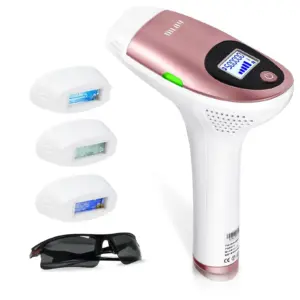
Laser light can be hazardous to the eyes, which makes appropriate protective eyewear an essential part of professional equipment use. The exact protective eyewear required depends on the wavelength and laser system. Random sunglasses or generic tinted glasses should never be treated as adequate laser protection.
When purchasing wholesale, salon owners should ask whether suitable protective eyewear for the operator and client is included and whether its specifications match the device wavelengths. Replacement eyewear should also be available because protective equipment can become scratched, damaged, or lost over time.
Treatment rooms should have clear procedures for anyone entering while the laser is operating. The device manual and applicable professional guidance should be followed closely.
Safety equipment should be included in the real startup cost of launching the service rather than treated as an optional accessory.
Salon Owners Are Looking for Faster Treatment Times
Time is directly connected to salon profitability. If one machine takes an extremely long time to treat a large area, the salon can accommodate fewer clients during the working day.
Professional buyers therefore compare spot size, pulse repetition, movement mode, cooling, and handpiece ergonomics when evaluating machines. A system that allows trained operators to work efficiently can improve room utilisation, particularly for larger areas such as the legs, back, arms, or chest.
However, treatment speed should not come at the expense of correct technique or safety. High repetition rates and fast gliding modes still require proper settings and complete coverage.
Ask suppliers to demonstrate realistic treatment workflows rather than only showing the machine firing rapidly in the air. A real professional demonstration should explain how operating speed changes according to treatment area and client characteristics.
Handpiece Life Can Change the Real Cost of the Machine
Many salon owners compare machine prices without asking how long the handpiece or laser module is expected to last. Some suppliers advertise extremely high shot counts or long operating lifespans. These claims should be supported by the manufacturer’s technical information rather than accepted from marketing material alone.
Ask what happens when the handpiece reaches the end of its expected service life. Can the laser bars or diode module be replaced? Does the entire handpiece need replacement? How much does it cost, and is it available in Pakistan?
A machine that costs less upfront but requires an expensive replacement handpiece after relatively limited use may have a higher lifetime cost than a more expensive system with stronger service support.
For a busy salon, downtime also has a cost. Waiting several weeks for an imported handpiece can mean cancelling appointments and refunding customers.
Machine Maintenance Should Be Considered Before Purchase
Professional laser hair-removal machines usually contain cooling systems, filters, pumps, fans, electrical boards, touchscreens, handpieces, and other components that may require routine maintenance.
Ask the supplier which maintenance procedures the salon will need to perform and which require a technician. Some systems may need cooling water checked or changed according to the manufacturer’s guidance, while filters and vents may require regular cleaning.
The salon should also know whether technical support is available in its own city. A supplier located far away may offer an attractive price but create significant problems when the machine develops a fault. Before paying, ask who repairs the machine, which parts are stocked locally, whether on-site support is available, and what happens during the warranty period.
Maintenance support is one reason experienced salon owners increasingly compare suppliers rather than selecting equipment only by purchase price.
Warranty Is More Important Than a Free Accessory Package
Wholesale beauty-machine advertisements often include free goggles, treatment gel, trolley, stool, training, or additional handpieces. These extras can be useful, but they should not distract buyers from the equipment warranty.
Ask exactly what the warranty covers. Does it include the main machine, laser handpiece, cooling system, touchscreen, power supply, pump, and internal boards? Are consumable components excluded? Who pays transportation when a repair is required?
A written warranty is much stronger than a salesperson promising, “Any problem, we will handle it.”
The supplier should also state the warranty period on the invoice. Keep the machine serial number, purchase invoice, training documents, technical manual, and maintenance records together.
For a salon depending on the machine for daily revenue, repair response time can matter almost as much as warranty duration.
Buying Wholesale Makes More Sense When Opening Multiple Branches
Salon chains and expanding beauty businesses can benefit even more from wholesale purchasing because they may need the same machine in several branches. Standardising equipment makes staff training easier and can simplify spare-part management. Operators transferred between branches do not need to learn completely different interfaces, while management can develop one set of treatment procedures.
Multiple-unit orders can also create stronger negotiating power. Buyers may request reduced machine rates, additional handpieces, extended training, spare parts, delivery, or better service arrangements.
However, salons should pilot the equipment at one location before purchasing several units whenever possible. Real-world performance over several months provides much better information about reliability than a showroom demonstration.
Scaling a good machine is smarter than discovering the same technical problem across five branches at once.
Salon Owners Can Create Treatment Packages
A professional hair-removal service gives salons more pricing flexibility than a simple one-time appointment.
Instead of offering only an individual session, a salon may create packages based on treatment areas and professionally recommended treatment schedules. Clients may prefer package pricing when they already understand that multiple sessions are expected.
From a business perspective, packages can improve cash flow and increase the likelihood of customers completing their treatment course. However, package policies should clearly explain validity periods, missed appointments, refunds, transfers, and what happens if the professional decides that continued treatment is not appropriate.
Do not sell an unrealistic unlimited-lifetime package without understanding the financial and operational consequences. Hair regrowth and future maintenance needs can vary significantly between clients.
Transparent packages create fewer disputes than aggressive promotional promises.
Laser Services Can Help Salons Compete Beyond Price
Many beauty services are easy for customers to compare purely by price. When ten nearby salons offer similar threading or waxing, the customer may simply choose the cheapest or closest option. Adding specialised equipment can allow a salon to compete through service range, consultation quality, staff expertise, technology, hygiene, and professional experience rather than only price.
This does not mean purchasing an expensive machine automatically creates a premium brand. The treatment room should also be clean, private, organised, and professionally managed. Staff should explain the process clearly and avoid exaggerated claims.
Customers spending more on a laser service expect more confidence and professionalism than someone buying an ordinary waxing appointment.
The machine may attract attention, but the complete customer experience determines whether clients recommend the salon to others.
Client Records Become More Important with Laser Services
Salons offering laser treatments need better customer records than businesses providing only occasional beauty services. Treatment records may need to include the area treated, date, machine used, settings, client response, relevant consultation information, patch-test details when applicable, and any unusual reaction.
This helps the operator understand what happened during previous sessions and provides greater consistency when the customer returns.
Before treatment, the client should also be asked about relevant medicines, recent tanning, history of scarring, skin concerns, and other issues. The AAD specifically advises discussing factors such as recent tanning, keloids, scarring tendency, herpes outbreaks, isotretinoin use, and other medicines before laser hair removal. Good record keeping should be part of the salon’s operating system before the first paying customer is treated.
Keeping up with changing customer preferences is important for retailers and resellers who want to stock products that attract attention and generate sales. Popular categories can change quickly, so identifying products with growing demand can help businesses make better inventory decisions. For those looking for currently popular items, exploring HOT Selling Products can provide useful ideas for selecting products to add to their retail inventory.
Avoid Machines Making Unrealistic “Painless” Claims
Many machines are marketed as completely painless because they include cooling technology. Cooling may improve comfort, but every client experiences sensation differently. Treatment settings, area, hair density, skin sensitivity, and individual tolerance all influence what the procedure feels like.
A more responsible promise is that the machine includes cooling designed to improve treatment comfort. Do not guarantee that every client will feel absolutely nothing.
The same caution applies to claims such as “100% permanent,” “zero side effects,” “works on every hair colour,” or “safe for everyone.” Laser hair removal is not suitable for every person or every type of hair, and side effects are possible. Honest communication may sound less dramatic in an advertisement, but it builds a more credible salon brand.
Ask for a Live Machine Demonstration Before Ordering
A brochure can tell you the screen size and number of wavelengths. It cannot tell you how the machine behaves after an hour of continuous use.
Before placing a large wholesale order, request a live demonstration using the actual model. Look at startup time, cooling performance, handpiece weight, touchscreen response, noise, treatment controls, emergency-stop system, and overall build quality.
Ask the trainer to explain the settings rather than simply running a preset mode. If nobody can clearly explain the technical parameters, that should concern a professional buyer. Salon owners should also ask to speak with existing businesses using the same model. A salon that has operated the machine for a year can provide more useful information about reliability and maintenance than a seller demonstrating a brand-new unit.
Check Documentation Before Paying
Professional equipment should arrive with clear manufacturer and model information. Request the operating manual, technical specifications, safety information, device identification, serial number, manufacturer details, and applicable certifications or regulatory documents.
Do not accept conflicting descriptions where the carton says IPL while the supplier calls it diode laser, or where different documents show different wavelengths and power ratings.
The FDA distinguishes laser and light-based hair-removal devices within regulated medical-device categories, which reinforces why accurate identification and documentation matter.
A professional salon should know exactly what technology it is operating on customers.
Calculate the Break-Even Point Before Buying
Before spending heavily on a machine, calculate how many paid sessions are needed to recover the investment. Include the purchase price, delivery, training, installation, protective equipment, room preparation, electricity, staff salary, maintenance, marketing, treatment consumables, payment charges, and estimated future repair costs.
Then calculate your realistic average profit per treatment after these expenses. If a machine and launch setup cost Rs. 1,000,000 and the salon earns an average contribution of Rs. 4,000 per completed appointment, around 250 appointments would be required simply to recover that initial amount before considering other ongoing business costs.
The exact numbers will vary significantly, but completing this calculation can stop salon owners from purchasing a machine only because a salesperson promises that it will “recover its cost in two months.”
Do Not Forget the Cost of Marketing the New Service
Buying the machine does not automatically fill the appointment calendar. A salon may need Meta advertising, influencer collaborations, WhatsApp marketing, introductory offers, content production, before-and-after education, signage, consultation campaigns, and promotions to introduce the service.
Existing customers are often the most economical audience to target first. Staff can explain the new service to appropriate clients already visiting for waxing, threading, skincare, or other beauty treatments.
Educational content can also work well. Explain how consultations work, why several sessions may be needed, who may not be an appropriate candidate, and what customers should do before an appointment. Responsible educational marketing can differentiate the salon from competitors promoting unrealistic guaranteed results.
Common Wholesale Buying Mistakes Salon Owners Should Avoid
One major mistake is choosing a machine only because the supplier advertises extremely high power or a very large number of laser shots. Technical performance needs to be understood in context rather than through marketing numbers.
Another mistake is buying from a supplier that offers no local technical support. Professional equipment will eventually need servicing, and waiting weeks for imported spare parts can interrupt the entire service.
Salon owners should also avoid buying IPL equipment while believing they purchased a diode laser simply because the seller used the word laser in the advertisement. Skipping proper training is another serious risk. The AAD warns that inexperienced laser operation can cause burns, permanent skin-colour changes, and scars.
Finally, never calculate the investment only from the machine price. Training, room setup, eyewear, maintenance, marketing, staff time, and future component replacement all contribute to the actual cost.
Why Salon Owners Are Turning to Wholesale Platforms
Searching for professional beauty equipment through random social media pages can make comparison difficult. One seller may focus on price, another advertises wattage, while another bundles training without explaining the machine manufacturer.
B2B platforms can make the sourcing process more organised by allowing business buyers to communicate directly with suppliers and request quotations according to their commercial requirements.
Through the Alahdeen B2B Marketplace, salon owners can explore beauty, personal-care, machinery, and related supplier categories and discuss bulk equipment requirements before placing an order.
Buyers can also explore the Alahdeen blog section for broader guidance on wholesale buying, supplier verification, beauty products, imported inventory, and B2B sourcing in Pakistan. Alahdeen can help salon owners discover potential suppliers, but a professional laser machine should still undergo independent technical, regulatory, safety, and commercial verification before purchase.
What Salon Owners Should Ask a Supplier Before Ordering
Before transferring payment, ask the supplier for the complete machine model and manufacturer rather than accepting a general name such as “3-wavelength diode laser.” Ask what technology the device actually uses, which wavelengths it provides, what its energy and pulse controls are, how cooling works, what electrical supply is required, and which client profiles the manufacturer considers appropriate.
Confirm what operator training is provided, what protective equipment is included, and whether additional training is available when salon staff change.
Ask about machine and handpiece warranty separately. Confirm spare-part prices and service turnaround. Finally, request a formal written quotation describing everything included. Professional equipment purchases should not depend on a collection of WhatsApp voice notes that become difficult to reference when a dispute occurs.
External Safety Guidance Salon Owners Should Read
Before introducing laser hair removal, salon owners should understand that professional hair-removal lasers require far more responsibility than ordinary beauty tools.
The American Academy of Dermatology provides detailed information about laser hair removal, preparation, expected treatment courses, and possible risks. It specifically warns that inexperienced operation can cause burns, changes in skin colour, and scarring.
Salon owners can review the American Academy of Dermatology’s official laser hair removal guidance through its laser hair removal resources before designing their service and staff-training procedures. The U.S. FDA also explains that medical lasers carry potential risks and should be used with appropriate controls and training.
These external resources should supplement, not replace, applicable Pakistani regulatory requirements, professional training, manufacturer instructions, and qualified medical or technical advice.
How Alahdeen Can Help Salon Owners Source Beauty Equipment
Alahdeen can provide a starting point for salons searching for wholesalers, importers, equipment suppliers, and beauty-product businesses in Pakistan. Instead of requesting prices from only one local shop, salon owners can use Alahdeen to explore supplier options and discuss commercial requirements.
This may be particularly useful for a new salon purchasing several categories together, such as hair-removal equipment, facial machines, manicure tools, salon furniture, beauty accessories, and related inventory.
However, supplier discovery and machine approval are different steps. Finding a seller through a marketplace should be followed by technical documentation checks, a live demonstration, training assessment, warranty verification, and useful professional advice before the machine is used on customers.
Conclusion
Salon owners are considering wholesale laser hair removal machines in 2026 because the service can create repeat appointments, increase revenue per customer, broaden the salon’s treatment menu, and reduce dependence on ordinary waxing and threading services.
Wholesale buying may improve commercial pricing and allow salons to negotiate training, accessories, technical support, and other equipment as part of a larger purchase.
However, the machine should never be selected only by price, number of wavelengths, advertised power, or touchscreen appearance. Device technology, cooling, documentation, treatment controls, handpiece life, operator training, technical support, warranty, and client suitability all matter.
Laser hair removal also carries genuine safety risks. The American Academy of Dermatology warns that burns, permanent skin-colour changes, and scarring can occur when treatment is performed by inexperienced hands.
Salon owners should calculate the complete investment and break-even point, test the machine, verify its technology, train operators, maintain client records, and establish professional safety procedures before accepting appointments. Through Alahdeen, beauty businesses can begin comparing potential equipment suppliers, but responsible machine verification and professional operation are what turn the investment into a sustainable service.
FAQ’s
1. Why are salon owners buying laser hair removal machines?
Laser hair removal can expand a salon’s service menu and generate repeat appointments because customers usually require several sessions rather than one treatment. The AAD notes that six sessions or more may be needed in many cases.
2. Is buying a laser hair removal machine wholesale cheaper?
Wholesale purchasing may provide better commercial pricing, particularly for salons buying directly from importers, distributors, or equipment suppliers. Actual savings depend on the machine, quantity, warranty, training, and supplier.
3. Is IPL the same as diode laser?
No. IPL uses broad-spectrum intense pulsed light, while laser devices use concentrated light at defined wavelengths. Buyers should confirm exactly which technology a machine uses rather than relying on its advertising name.
4. Which laser hair removal machine is best for a salon?
There is no single machine suitable for every salon. Compare technology, wavelengths, treatment controls, cooling, client skin tones, handpiece life, training, warranty, technical support, and expected treatment volume.
5. Does laser hair removal permanently remove every hair?
No result should be guaranteed for every person. Several treatments may provide long-term reduction, but maintenance may be required, and results vary. Hormonal facial hair can also continue to regrow.
6. Can an inexperienced beautician operate the machine?
Professional laser equipment requires appropriate training and safe operating procedures. The AAD warns that inexperienced treatment can result in burns, blisters, infection, dark marks, and scarring.
7. What should salon owners check before purchasing?
Check the machine manufacturer, exact model, technology, wavelengths, cooling, technical specifications, operator training, warranty, spare parts, local servicing, safety documentation, and live performance.
8. Why is cooling important in a laser machine?
Cooling can help manage heat at the treatment area and improve client comfort. Buyers should check how the cooling system works and whether it remains effective during longer sessions.
9. Should salon owners request a demonstration before ordering?
Yes. A live demonstration allows buyers to inspect controls, cooling, handpiece weight, noise, build quality, treatment settings, and overall machine operation before committing to a large investment.
10. Where can salon owners find wholesale beauty equipment suppliers in Pakistan?
Salon owners can explore professional beauty-equipment importers, distributors, manufacturers, salon suppliers, and B2B marketplaces such as Alahdeen.
Upgrade Your Beauty Business with Premium Laser Hair Removal Machine
Source professional laser hair removal machines at competitive wholesale prices. Ideal for salons and beauty businesses—request your free quote today.