Are you planning to install a Growatt inverter at home but confused whether 3kW, 5kW, 8kW, or 10kW is the right size for your electricity load?
This is a common question for many homeowners in Pakistan because every house has a different electricity routine. One family may only need backup for fans, lights, a refrigerator, TV, and Wi-Fi. Another family may want to run one inverter AC during the day. A larger home may have multiple ACs, water pumps, deep freezers, washing machines, and higher daytime usage. In this situation, choosing the inverter only by price or by what a shopkeeper recommends can lead to the wrong decision.
For most medium-sized homes in Pakistan, a 5kW Growatt inverter is often the most balanced choice because it can handle common household loads such as fans, lights, refrigerator, TV, router, washing machine, and one inverter AC with proper load management. Smaller homes or apartments with basic loads may be fine with a 3kW Growatt inverter, while larger homes with multiple ACs, more appliances, and future expansion plans may need an 8kW to 10kW Growatt inverter. The best size always depends on your actual load, roof space, solar panel capacity, battery backup requirement, and daily usage pattern.
Why Growatt Inverter Size Matters for Homes in Pakistan
In Pakistan, many people install solar to reduce electricity bills and handle load shedding. But even if you buy good solar panels, the system may disappoint you if the inverter size is wrong. An undersized inverter can trip when the load increases. An oversized inverter can increase your upfront cost without giving full benefit if your home load is low.
Growatt is a well-known inverter brand used in residential and commercial solar systems. Growatt’s official product range includes residential, commercial, utility, storage, and off-grid solutions, which means buyers have multiple sizes and models to choose from.
The challenge is that many Pakistani buyers do not calculate load properly. They simply ask the seller for a “5kW system” or “10kW system” without listing appliances. A better approach is to first understand what you want to run, how many hours you use it, and whether you need battery backup.
Simple Answer: Which Growatt Size Is Best?
For a small home with fans, lights, TV, router, and refrigerator, a 3kW Growatt inverter may be enough. For a medium home with fans, lights, refrigerator, washing machine, water pump, and one inverter AC, a 5kW Growatt inverter is usually the most practical choice. For a larger home with two or more inverter ACs, bigger refrigerators, water motors, and higher daytime use, an 8kW to 10kW Growatt inverter is usually better.
The best size depends on your real load. A family using only basic appliances does not need the same inverter as a family running air conditioners for long hours.
Growatt 3kW Inverter: Best for Small Homes
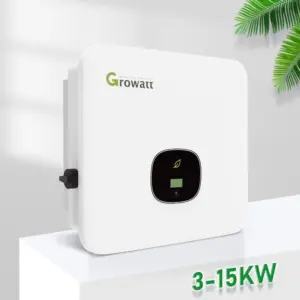
A 3kW Growatt inverter is suitable for small homes, apartments, and low-load users. It can support basic household appliances such as fans, LED lights, Wi-Fi router, TV, laptop charging, and a refrigerator if the load is managed properly.
This size is useful for users who mainly want bill reduction and backup for essential items. It is also a good choice for homes with limited roof space, where panel capacity cannot be very high.
However, a 3kW inverter is not ideal for running heavy loads. If you want to run an inverter AC, water motor, iron, microwave, or multiple large appliances at the same time, 3kW may feel limited. It can work for basic use, but it is not a future-proof choice for growing household demand.
Growatt 5kW Inverter: Best for Most Medium Homes
A 5kW Growatt inverter is often the most balanced option for Pakistani homes. It gives enough capacity for common household appliances and can support one inverter AC during daytime if the system is designed correctly.
A typical medium home may use fans, lights, refrigerator, TV, router, washing machine, water pump, and one inverter AC. With proper panel capacity and load management, a 5kW Growatt inverter can handle this kind of usage better than a smaller inverter.
This size is popular because it balances cost and performance. It is not as expensive as larger systems, but it gives more flexibility than 3kW. For many families, 5kW is the practical middle point.
However, if your home has two or three ACs and you want to run them together, 5kW may not be enough. In that case, you should consider a larger inverter.
Growatt 8kW Inverter: Best for Larger Homes
An 8kW Growatt inverter is better for larger homes with heavier electricity usage. If your home has multiple inverter ACs, a deep freezer, water pump, washing machine, and other appliances, 8kW gives more room to manage the load.
This size can also be useful for homes that plan future expansion. For example, if you currently use one AC but plan to add another AC, EV charging, or more appliances later, an 8kW inverter may be a smarter long-term choice.
But buyers should not select 8kW only because it sounds powerful. The roof should have enough space for matching solar panels, and the budget should include wiring, protection equipment, mounting structure, and batteries if backup is required.
Growatt 10kW Inverter: Best for Heavy Home Loads
A 10kW Growatt inverter is suitable for large homes, double-story houses, villas, and home-office setups with heavy daytime electricity usage. It is useful when the household wants to run multiple ACs, refrigerators, pumps, office equipment, and other appliances.
A 10kW system can reduce electricity bills significantly if daytime usage is high. But it needs proper design. The installer must check panel capacity, inverter model, phase requirement, net metering plan, cable size, protection devices, and roof space.
For homes with low daytime usage, a 10kW inverter may be too large. If you install a large system but do not use electricity during the day or cannot export through net metering, the benefit may not be fully used.
Home Load-Based Growatt Inverter Guide
For basic home use, a 3kW Growatt inverter can support essential loads such as 3 to 5 fans, LED lights, Wi-Fi router, TV, and a refrigerator with careful load management. For medium home use, a 5kW Growatt inverter can support common household loads and one inverter AC during the day, if the solar panels and wiring are properly designed.
For large home use, an 8kW Growatt inverter can support multiple rooms, heavier appliances, and better future expansion. For premium or heavy-load homes, a 10kW Growatt inverter can support multiple inverter ACs and larger daytime consumption.
The right inverter size should be selected after calculating actual load. Do not depend only on room count or house size. Two homes of the same size can have very different electricity usage.
How to Calculate Your Home Load Before Buying
Before buying a Growatt inverter, make a list of appliances you want to run. Write down fans, lights, refrigerator, TV, router, washing machine, water pump, iron, microwave, deep freezer, and air conditioners.
Then check the wattage of each appliance. Add the appliances you want to run at the same time. After that, add extra margin for startup surge, especially for refrigerators, water pumps, and motors.
Stay informed with the Alahdeen Blog: https://alahdeen.com/blogs/blogs-list/
For example, if your running load is around 3,500 watts, a 5kW inverter may be suitable. If your running load is around 6,000 watts, you may need 8kW or higher. If your running load is only 1,500 to 2,000 watts, a 3kW inverter may work.
A professional installer should do this calculation before recommending a system.
Growatt Inverter Size and Solar Panel Capacity
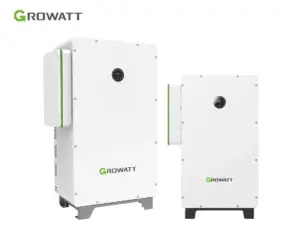
The inverter size should match your solar panel capacity. A 5kW inverter usually needs a solar panel setup close to that range, depending on model and design. An 8kW or 10kW inverter needs more panels and more roof space.
If you install fewer panels than needed, the inverter may not perform to its full potential. If you oversize panels incorrectly, the system may face voltage or design issues. This is why string design and MPPT range matter. Growatt offers different inverter types, including on-grid, hybrid, and storage solutions. Buyers should choose the model according to their system type.
Growatt Inverter Size and Battery Backup
If you want backup during load shedding, inverter size alone is not enough. You also need the right battery capacity. A 5kW inverter with a very small battery will not provide long backup. An 8kW inverter with undersized batteries may also disappoint you.
Battery backup depends on load and battery capacity. If you want to run fans, lights, router, and TV, a smaller battery bank may work. If you want to run ACs during outages, you need a larger lithium battery bank.
Battery storage is becoming more important in Pakistan. IEEFA reported that Pakistan imported an estimated 1.25 GWh of lithium-ion battery packs in 2024 and another 400 MWh in the first two months of 2025, showing rapid growth in battery adoption.
For homes with frequent outages, choose inverter and battery together instead of separately.
On-Grid or Hybrid Growatt Inverter: Which One Is Better?
An on-grid Growatt inverter is suitable if your main goal is reducing electricity bills and you do not need battery backup. It works with solar panels and grid supply. If net metering is available, excess solar energy can be exported according to local rules.
A hybrid Growatt inverter is better if you want battery backup. It can manage solar panels, grid power, and batteries, depending on model. Hybrid systems cost more because they require batteries, but they are more useful in areas with load shedding.
For many homes in Pakistan, hybrid systems are attractive because people want both savings and backup. However, if your area has stable electricity and your main goal is bill reduction, on-grid may be more cost-effective.
Which Growatt Size Is Best for a 5 Marla Home?
For a 5 marla home, a 3kW to 5kW Growatt inverter is usually enough, depending on load. If the home has basic appliances and no AC requirement, 3kW may work. If the home uses one inverter AC, refrigerator, washing machine, and water pump, 5kW is usually better.
Which Growatt Size Is Best for a 10 Marla Home?
For a 10 marla home, a 5kW to 8kW Growatt inverter is usually more practical. If the family uses one AC and normal household appliances, 5kW may be enough. If there are multiple ACs and heavier loads, 8kW may be better.
Which Growatt Size Is Best for a 1 Kanal Home?
For a 1 kanal home, 8kW to 10kW is often more suitable, especially if there are multiple ACs, larger appliances, and higher daytime usage. However, actual load calculation is still required.
Common Mistakes Buyers Make
Many buyers choose inverter size based on budget only. This can create problems. A cheap smaller inverter may not handle the load. A larger inverter may waste money if the home does not need it. Another mistake is ignoring future expansion. If you plan to add ACs, batteries, or more solar panels later, choose an inverter that supports future needs.
Some buyers also ignore battery sizing. They buy a good inverter but pair it with weak batteries. This reduces backup performance. Another common mistake is hiring an inexperienced installer. Even the right inverter can perform badly if wiring, string design, earthing, or protection equipment is poor.
How Alahdeen Helps Solar Buyers in Pakistan
Solar buying can become confusing because a complete system includes panels, inverter, batteries, structure, cables, breakers, DB boxes, and installation accessories. A buyer may choose the right inverter size but still face problems if other components are not suitable.
Alahdeen helps buyers explore solar and electrical categories in one place. This is useful for homeowners, installers, retailers, contractors, and bulk buyers who want to compare suppliers before purchasing.
For solar products, visit Alahdeen’s Solar & Renewable Energy Products Category. For electrical accessories, visit Electronics & Electrical.
FAQ’s
Which Growatt inverter size is best for a home in Pakistan?
For most medium homes, a 5kW Growatt inverter is the best practical choice. Small homes may use 3kW, while larger homes may need 8kW to 10kW.
Is 3kW Growatt inverter enough for a home?
A 3kW inverter is enough for basic loads such as fans, lights, TV, router, and refrigerator with proper load management. It is not ideal for heavy AC loads.
Can 5kW Growatt inverter run an AC?
Yes, a 5kW Growatt inverter can usually run one inverter AC during daytime if the solar panel capacity, wiring, and load management are properly designed.
Is 10kW Growatt inverter too big for a home?
It depends on the home load. For a large home with multiple ACs and high daytime usage, 10kW can be suitable. For a small home, it may be oversized.
Should I choose on-grid or hybrid Growatt inverter?
Choose on-grid if your goal is bill reduction and grid supply is stable. Choose hybrid if you need battery backup during load shedding.
How many solar panels are needed for a 5kW Growatt inverter?
The number depends on panel wattage. With 580W panels, a 5kW system may need around 8 to 9 panels, depending on design.
Can Growatt inverter work with lithium batteries?
Many Growatt hybrid and storage models support battery systems, but buyers should confirm lithium compatibility and BMS support for the exact model.
Where can I buy Growatt inverters in Pakistan?
Buyers can explore Growatt inverters, solar panels, batteries, and related products through Alahdeen’s Solar & Renewable Energy Products Category.
Conclusion
The best Growatt inverter size for a home in Pakistan depends on actual electricity load, solar panel capacity, battery backup needs, and future expansion. A 3kW inverter suits small homes with basic loads. A 5kW inverter is usually best for medium homes. An 8kW to 10kW inverter is better for larger homes with multiple ACs and heavier usage.
The right decision should be based on load calculation, not guesswork. Buyers should also consider battery size, roof space, net metering, and installation quality.
Power Smarter with Genuine Growatt Inverters
Get genuine Growatt inverters at competitive prices with reliable performance and trusted warranty. Request your free quote today.

Other Articles

How Long Does a Lithium Battery Last in Pakistan?